
Nala Design New Collections Brutal TImes May 2026

SUBSCRIBE

LOGIN

NALA HAPPY TIMES

DESIGN

CULTURE

TASTE

TRAVEL

FOOD

THURSDAY SHOWS

UNAGI CLUB

NALA'S SHOP

DESIGN

CULTURE

TASTE

TRAVEL

FOOD

THURSDAY SHOWS

UNAGI CLUB

ARCHIVES

CONTRIBUTORS

DISCOVER

Nala's Instagram

Nala's Facebook

Nala's LinkedIn

Lisetts's LinkedIn

Nala's Tiktok

Nala's Youtube

OUR BRAND

About us

Nala's locations

FAQs

Customer service

Careers

Manifesto

HIGHLIGHT

Latest issue on 7 Sept 2025. Update every Saturday.

Thursday Show
Wear the Story

Wear the Story

5 min read

Wear the Story

I’ll admit it, I never expected our T-shirts to become such a success. But they’ve been absolutely flying off the racks in Malaysia, and I think I know why. They’re fun.

LISETTE

SHARE

Where else are you going to find a giant red chair on the back of a T-shirt? One of our favourite patterns, inspired by an everyday plastic chair, has made the leap from artwork to fashion, continuing its journey from ordinary to art and back to ordinary again.

We’re also bringing back our beloved dandelion. For us, it’s more than just a flower. It’s a little symbol of resilience, of standing tall and blooming wherever life plants you. A quiet reminder, especially for women, that strength can be both gentle and beautiful.

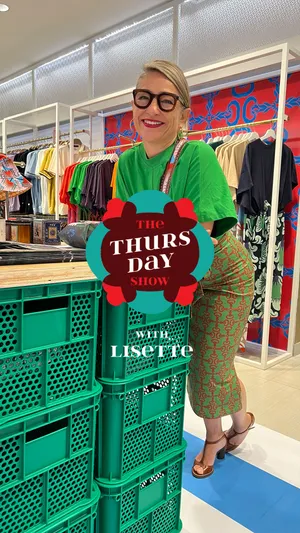
The skirt that thinks it is a painting.

This latest edition is even better. Every T-shirt is hand printed, and we’ve upgraded the cotton to a thicker, more luxurious quality that’s designed to last.

I love that these pieces don’t take themselves too seriously. They’re little wearable artworks that make people smile and, judging by how quickly they’ve been disappearing, it seems we’re not the only ones who think so.

Available from next week, and ready to add a little joy, a little colour, and perhaps even a very large red chair to your wardrobe.

The skirt that thinks it is a painting.
Gijs Frieling: Keeping the Art of Murals Alive

Gijs Frieling: Keeping the Art of Murals Alive

5 min read

Gijs Frieling: Keeping the Art of Murals Alive

Fourteen years ago, during Milan Design Week, I found myself at a Wallpaper* event at the Brioni headquarters.

LISETTE

SHARE

Dutch artist Gijs Frieling and Job Wouters were creating a live mural called Amor e Consola, or Love and Comfort. I remember standing there completely captivated. The colours, the confidence, the craftsmanship. It was one of those moments where you know you’ve discovered an artist who will stay with you.

At the time, I was deeply involved in mural painting myself. We created large hand painted walls for Delicious, the BIG group and many of our Nala stores. Each mural was unique, telling a story about the place and the people who visited it. Today, the last of our original murals can still be seen in Penang, where walls bloom with flowers that have become part of the shop’s identity. Watching Gijs Frieling paint that evening in Milan felt like meeting a kindred spirit, someone who believed that walls deserve to tell stories too.

Born in Amsterdam, Frieling has built a remarkable career creating murals that blur the line between art, decoration and architecture. His paintings draw from folklore, mythology, religion and nature, creating spaces that feel timeless. In a world increasingly dominated by white walls and temporary trends, his work is a celebration of craftsmanship and colour.

His latest publication, That Very Night in Max’s Room a Forest Grew…, brings together many of the extraordinary murals he has painted in private homes. It is more than a catalogue of artworks. It is a testament to an art form that has existed for centuries, one that asks us to think differently about the spaces we inhabit and the stories they can hold.

The skirt that thinks it is a painting.

What I admire most about Gijs Frieling is his commitment to keeping this tradition alive. Murals require patience, skill and trust. They cannot simply be moved to another room or packed away. They become part of a building’s history and, in many ways, part of the lives of the people who live with them.

Seeing this beautiful book reminded me how much I miss creating murals myself. I hope that one day we will return to painting walls and transforming spaces, not only because they are beautiful, but because they preserve a craft that deserves to survive. In an increasingly digital world, there is something profoundly human about putting brush to wall and creating something that may last for generations.

Some artists make paintings. Gijs Frieling creates worlds. Fourteen years after watching him paint live in Milan, I am still inspired by his work and by his dedication to an art form that should never become a lost art.

The skirt that thinks it is a painting.
The Frozen Fountain: A Lesson in Coming Home

The Frozen Fountain: A Lesson in Coming Home

5 min read

The Frozen Fountain: A Lesson in Coming Home

There are some places I never miss when I’m back in Amsterdam. The Frozen Fountain is one of them.

LISETTE

SHARE

It’s difficult to describe exactly what it is. Part gallery, part furniture store, part design museum, it feels a little like IKEA grew up, went to art school and developed impeccable taste. Every corner is carefully considered, every object has breathing space, and every room invites you to imagine a different way of living.

Walking through it this week, something unexpected struck me. There wasn’t actually that much that was new.

At first, I thought that was disappointing. I’m so used to working in fashion, where we’re constantly thinking about the next collection, the next pattern, the next idea. At Nala, we reinvent ourselves every few months. But The Frozen Fountain reminded me of something I’d almost forgotten.

If something is beautiful, it doesn’t need to change.

The sofas I admired last year were still beautiful. The lamps I wanted to take home were still perfect. The carpets, the ceramics, the art, they had lost none of their appeal simply because time had passed. Good design doesn’t chase trends. It quietly waits for you to appreciate it.

Of course, I still wanted to buy half the shop. A beautiful sofa, a sculptural lamp, an incredible rug and a few pieces of art somehow all found their way onto my imaginary shopping list. Reality quickly reminded me that these things require a slightly larger budget than my suitcase could handle, but dreaming is part of the experience.

The skirt that thinks it is a painting.

What I love most is the visual merchandising. The colour combinations are extraordinary. Nothing feels forced or overcrowded. Every object has a purpose, proving that less really can be more. It’s an inspiring reminder that a home doesn’t have to be filled with things. It simply needs to be filled with the right things.

Perhaps that’s also a very Dutch way of looking at life.

The Dutch invest in their homes. They’ll save for years for the perfect sofa, a beautiful dining table, an artwork or a carpet that they’ll treasure for decades. They might skip a holiday to buy a piece they truly love because home matters. It’s where life happens. It’s where friends gather, families grow and quiet moments are spent. Creating a beautiful home isn’t considered a luxury. It’s considered part of living well.

There’s a touch of wabi-sabi in that philosophy too. The idea that home should bring a sense of peace and comfort, that beauty doesn’t need to be loud and that carefully chosen objects can quietly improve everyday life.

Walking through The Frozen Fountain was a lovely reminder for me personally. Perhaps we don’t always need to reinvent ourselves. Perhaps good ideas deserve time to breathe. Perhaps a beautiful object, a comfortable chair or a well chosen lamp can stay with us for years and become part of our story.

And perhaps that’s the secret of good design. It’s not about constantly buying something new.

It’s about creating a home you never want to leave.

The skirt that thinks it is a painting.
Amsterdam, Beyond the Postcard

Amsterdam, Beyond the Postcard

5 min read

Amsterdam, Beyond the Postcard

Whenever people hear I’m going to Amsterdam, the same things come up. Bicycles. Canals. Coffee shops.
But within a few hours of arriving, I’m reminded that the city’s real magic lies somewhere else entirely.

LISETTE

SHARE

Amsterdam is a city best explored on foot. Walking through it feels like wandering through an open air museum, where every street reveals another beautiful facade, another perfect window, another carefully tended garden. The houses seem to compete, not in grandeur, but in charm.

What always strikes me is the abundance of flowers. Roses climb up historic facades, fig trees stand proudly in front gardens, and window boxes overflow with seasonal blooms. It’s impossible not to notice that flowers are woven into Dutch life. They aren’t reserved for special occasions. They’re part of the everyday. Real flowers, fresh flowers, growing wherever they can, making ordinary streets feel extraordinary.

The same philosophy extends indoors. Peek through a window and you’ll often spot a vase of fresh flowers on a table or desk. It’s a small detail, but it says something about the Dutch approach to beauty. You don’t wait for a celebration. You simply make everyday life a little more beautiful.

The skirt that thinks it is a painting.

And then there are the signs.

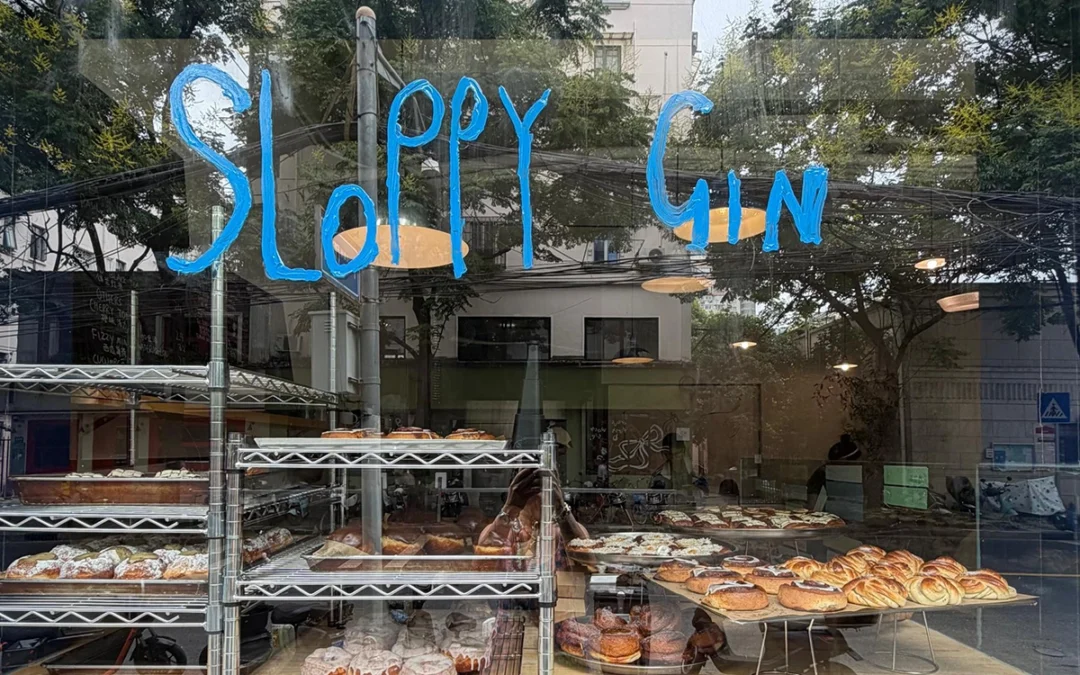
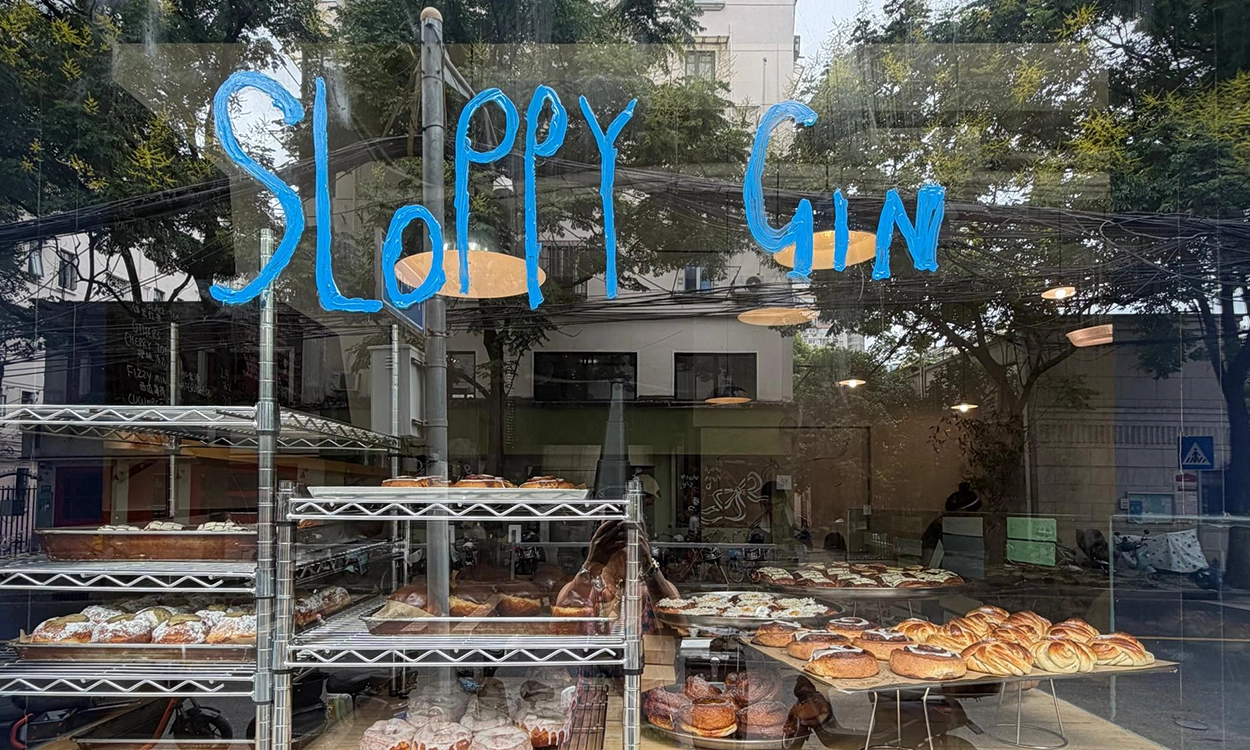
Without stepping into a single shop, Amsterdam offers a masterclass in typography. Traditional cafés and bars still proudly display their names in hand painted lettering, often in the famous Amsterdamse Krulletter, or Amsterdam Curly Letter. Developed in the 1940s and perfected by generations of Dutch sign painters, these elegant swirls and flourishes have become part of the city’s identity, decorating windows and facades with a craftsmanship that refuses to disappear. It’s a wonderful reminder that even something as practical as a shop sign can become a work of art.

I arrived yesterday to one of those perfect postcard days. Soft clouds drifting across a blue sky, bicycles quietly passing by, roses in full bloom and beautiful hand painted signs catching the afternoon light. There was no need to visit a museum or gallery. The city itself was enough.

Perhaps that’s what I love most about Amsterdam. It doesn’t separate art from everyday life. Flowers belong on the streets. Beautiful lettering belongs on shop windows. Historic houses are meant to be lived in. Beauty isn’t hidden away. It’s simply part of the daily routine.

And maybe that’s the best souvenir the Dutch have to offer: the idea that ordinary life deserves extraordinary care.

The skirt that thinks it is a painting.
Ordinary. Art. Ordinary Again.

Ordinary. Art. Ordinary Again.

5 min read

Ordinary. Art. Ordinary Again.

I’ve always believed that the most beautiful ideas come from the most ordinary places.

LISETTE

SHARE

One of my favourite patterns started with a simple plastic chair. It was one of the very first designs in the Banal series, a celebration of the everyday objects we often overlook. I loved the idea that something so familiar could become a piece of art, simply by looking at it differently.

Years later, that story has come full circle.

The skirt that thinks it is a painting.

The pattern has found its way back into everyday life as Sila Duduk, our new collection of stools. I love the journey it has taken. An ordinary object became art, and that art has become an ordinary object once again, ready to be part of someone’s home and daily routine.

Sila Duduk, which means “please, have a seat,” is designed to be wonderfully useful. It can be a stool, a side table, a bedside companion, a footrest, or simply a cheerful splash of colour in a room. Small enough to fit anywhere and versatile enough to become indispensable, it’s the kind of object that quietly finds its place in your life.

There’s something deeply satisfying about this cycle. Good design shouldn’t live behind glass or only on gallery walls. It should be touched, used, enjoyed and lived with. The best objects are often the ones that make everyday life a little more beautiful.

Ordinary. Art. Ordinary Again.

It’s a simple idea, but perhaps that’s exactly the point. Beauty is all around us. Sometimes we just have to look twice.

Exclusively available at Kasturi.

The skirt that thinks it is a painting.