
Nala Design New Collections Brutal TImes May 2026

SUBSCRIBE

LOGIN

SHOP NOW

NALA HAPPY TIMES

DESIGN

CULTURE

TASTE

TRAVEL

FOOD

THURSDAY SHOWS

UNAGI CLUB

NALA'S SHOP

DESIGN

CULTURE

TASTE

TRAVEL

FOOD

THURSDAY SHOWS

UNAGI CLUB

ARCHIVES

CONTRIBUTORS

DISCOVER

Nala's Instagram

Nala's Facebook

Nala's LinkedIn

Lisetts's LinkedIn

Nala's Tiktok

Nala's Youtube

OUR BRAND

About us

Nala's locations

FAQs

Customer service

Careers

Manifesto

HIGHLIGHT

Latest issue on 7 Sept 2025. Update every Saturday.

Thursday Show
The Universe Sent Me Aliya

The Universe Sent Me Aliya

5 min read

The Universe Sent Me Aliya

I often say that the universe gives us what we need, not always what we want.
Looking back, I’m convinced that’s exactly how I met Aliya.

LISETTE

SHARE

During COVID, I had to renew my Malaysian driving licence, and my instructor was Suzana. Since I’d already been driving for years, the lessons were really just an excuse for us to chat. While I was supposedly “learning” to drive, Suzana was scrolling through my Instagram, looking at all my latest Nala patterns and happily telling me which ones she liked, which ones she didn’t, and which colours she thought worked best. Somewhere along the way, my driving instructor unexpectedly became my design consultant.

When it came time to finalise my second Tudung collection, Suzana even brought a few of her fellow driving instructors to our office. They spent the afternoon looking through every design, feeling the fabrics and discussing the colours. I trusted their instincts completely, and every single design they approved became part of the final collection. It might sound unusual, but I’ve always believed that good design should resonate with real people, and that’s exactly what happened.

Not long afterwards, we urgently needed someone for a photoshoot. Suzana had once mentioned that she had a daughter, so I gave her a call and asked if Aliya might be available. Less than half an hour later, Aliya walked into our Kasturi store, and that was the first time I met my muse.

What I love most about Aliya is that she’s simply herself. She has a natural beauty that never tries too hard. She looks just as wonderful without makeup as she does with it, and somehow every collection feels at home on her. Whether she’s wearing our Chinese New Year collection, a Raya outfit, one of our T-shirts or now Aloha Kita, she wears every piece with quiet confidence, pride and humility. She never overshadows the collection. She brings it to life.

The skirt that thinks it is a painting.

Today she’s part of the Nala family, she’s studying marketing, and we’re all looking forward to welcoming her back once she graduates. Some people become the face of a brand. Aliya became part of its heart.

Sometimes the universe has a far better plan than we could ever imagine. Mine just happened to begin with a driving lesson.

The skirt that thinks it is a painting.
One Great Piece Can Change a Room

One Great Piece Can Change a Room

5 min read

One Great Piece Can Change a Room

Our collection of handcrafted furniture upholstered in Nala archive fabrics has now found a new home
at Nala Bangsar Village.

LISETTE

SHARE

You don’t need a house full of designer furniture to create a beautiful space. Sometimes, all it takes is one special piece. Mix it with vintage finds, family heirlooms, or even your favourite IKEA furniture, and suddenly the whole room comes to life.

That’s exactly how we love to decorate. Old and new. Colour and simplicity. Pieces with a story.

The skirt that thinks it is a painting.

Each Nala chair, stool, and bench is handmade in Malaysia by Mr. Soo and upholstered in fabrics from our archive, making every piece completely unique.

While you’re there, you’ll also find our latest T shirts, with the Aloha collection arriving soon.

Come and visit Nala Bangsar Village and discover how one beautiful piece can transform your home.

The skirt that thinks it is a painting.
Aloha Botanica: One Night on Penang Hill

Aloha Botanica: One Night on Penang Hill

5 min read

Aloha Botanica: One Night on Penang Hill

Every collection starts differently.
Aloha by Nala began with one night on Penang Hill.

LISETTE

SHARE

I checked into a beautifully restored house, turned off my phone, ignored my emails, and disappeared offline for two days. For someone running a business, that is probably the equivalent of a silent meditation retreat. Armed with a sketchbook and an unhealthy level of curiosity, I spent my time wandering around the hill drawing flowers.

What began as a few sketches quickly turned into a full-blown investigation. Every plant I drew sent me down another rabbit hole. Where did it come from? How did it end up on Penang Hill? Was it native? Was it medicinal? Did it have any symbolism attached to it?

The first flower I became obsessed with was the Bleeding Heart Vine. Originally from tropical West Africa, it somehow found its way across the world and now grows happily in Southeast Asia. Its name comes from the flower itself. The outer bracts form the shape of a heart, while the bright red petals emerge from the centre like a drop of blood. Once you see it, you cannot unsee it.

The plant is often associated with love, compassion, and emotional connection, which feels fitting given its appearance. Traditionally, various species of Clerodendrum have also been used in folk medicine to treat inflammation and minor ailments. Whether or not it works, I was fascinated before I even got to the medicinal properties. It was too strange and too beautiful not to draw.

The skirt that thinks it is a painting.

The second flower was the Canna Lily, and unlike the Bleeding Heart Vine, the Canna Lily does not believe in subtlety. Native to tropical America, it travelled across continents and eventually settled comfortably into tropical landscapes throughout Asia. Its enormous leaves and dramatic flowers look as though nature decided to turn the volume all the way up.

The Canna Lily is often associated with confidence, vitality, creativity, and resilience. Its rhizomes have historically been used as a source of starch and in traditional medicine, while the plant itself seems capable of thriving almost anywhere.

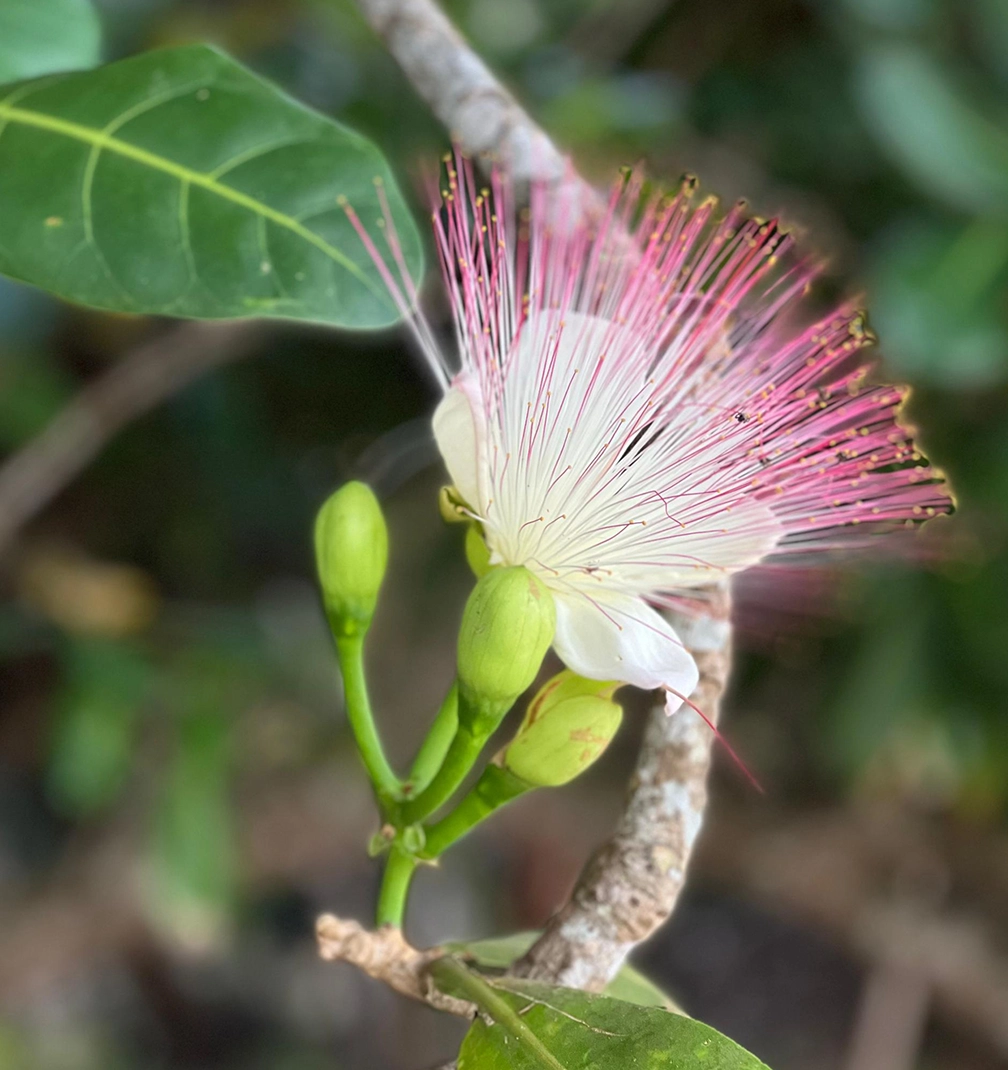
My favourite discovery, however, was the Needlewood Tree (Schima wallichii).

Unlike the other plants in this collection, this one truly belongs here. Native to Penang Hill and much of Southeast Asia, it has been part of these forests for centuries.

Its flowers are delicate and understated, with white petals surrounding a cluster of golden stamens. They are easy to miss if you are not paying attention.

Traditionally, parts of the tree have been used to treat fevers and inflammation, while its timber is valued for its strength and durability. Symbolically, the tree represents endurance, resilience, and quiet strength. If there is a plant in this collection that captures the spirit of Penang Hill itself, this is probably it.

The final motif was not a flower at all, but the palm trees that framed almost every view. Their silhouettes appeared repeatedly in my sketchbooks, often without me even realising it. Palm trees have long symbolised abundance, hospitality, freedom, and tropical life. More than anything, they became the backdrop against which all the other botanical stories unfolded.

What fascinated me was not the flowers themselves, but their journeys. Some travelled from Africa. Some came from the Americas. Some have been part of Penang’s landscape for centuries. Together, they tell a story about migration, adaptation, and survival.

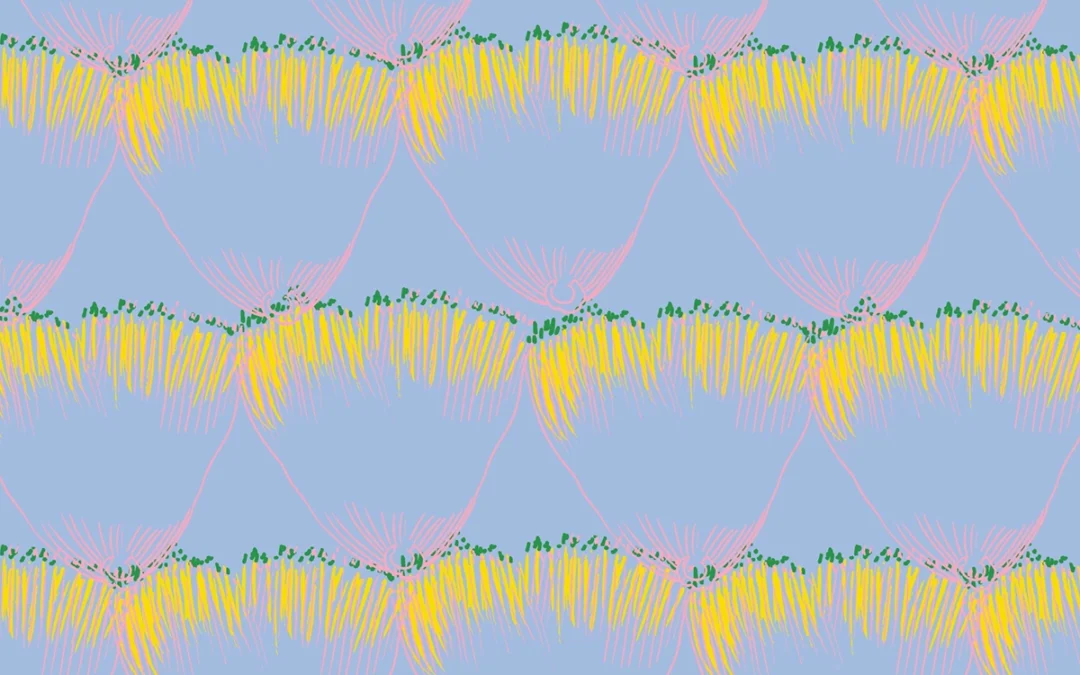
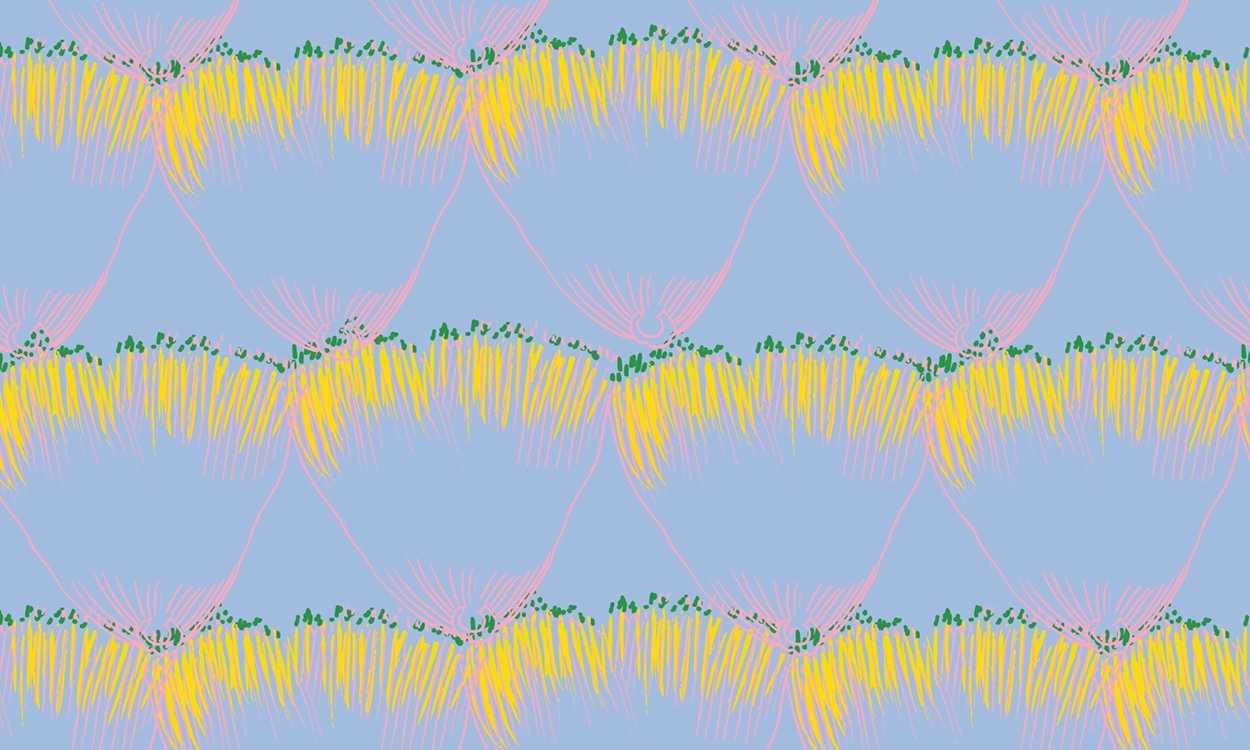
The drawings you see in Aloha by Nala began as sketches made during those two days on Penang Hill in February 2025. Over the following eighteen months, they slowly evolved into prints. Every flower, leaf, branch, wave, and palm frond was drawn by hand.

What I thought would be a short escape from work became a collection. More importantly, it reminded me that sometimes the best ideas are not found in trend reports or on Pinterest. Sometimes they are growing quietly beside a walking path, waiting for someone to stop, pay attention, and draw them.

The skirt that thinks it is a painting.
No Rumours. We’re Really Leaving.

No Rumours. We’re Really Leaving.

5 min read

No Rumours. We’re Really Leaving.

When landlord collaborations are not meant to be.
Well, it’s official. Kasturi is really, really closing.

LISETTE

SHARE

For a while, I genuinely thought we could save it. Not by fighting, but by collaborating. The idea was simple: work together with the temple, bring in partners, create a destination that would benefit everyone and give this iconic corner of the street a new lease of life. We were ready. We had ideas, energy and even potential collaborators lined up.

Sadly, it wasn’t meant to be.
The reality is that sometimes people see potential, and sometimes they simply see square footage and rental income. A tenant willing to pay more came along, and our story at Kasturi came to an end. It’s disappointing, especially because I truly believe we could have created something magical together.

The surprising part was what happened next. Our Instagram call for collaborators was met with an overwhelming response. Restaurants, retailers and creative entrepreneurs reached out with ideas and encouragement. We even found a partner, Kopi Hut, that I think would have made an incredible addition to the space. I would have loved to see that collaboration come to life. Perhaps in another place and another time.

The skirt that thinks it is a painting.

Kasturi has become more than just a shop. It’s part of the neighbourhood. A place where people discovered NALA, found unexpected treasures, had coffee, attended events and became part of our community. Seeing it go is bittersweet.

But there’s one thing I’ve learned as an entrepreneur. Sometimes you don’t get to choose the ending. You only get to choose how you leave.

So we’re leaving with colour, optimism and one final celebration. Our sale continues until the 28th, and we’re clearing fashion, homewares, furniture and some of the pieces that have made Kasturi so memorable. If you’ve been meaning to visit, this is your chance.

Come and wander through the space one last time. Shop your heart out, take home a piece of NALA history and help us give Kasturi the farewell it deserves.

Some collaborations are meant to happen. Others simply aren’t. Onwards and upwards.

The skirt that thinks it is a painting.
The Frozen Fountain: A Lesson in Coming Home

The Frozen Fountain: A Lesson in Coming Home

5 min read

The Frozen Fountain: A Lesson in Coming Home

There are some places I never miss when I’m back in Amsterdam. The Frozen Fountain is one of them.

LISETTE

SHARE

It’s difficult to describe exactly what it is. Part gallery, part furniture store, part design museum, it feels a little like IKEA grew up, went to art school and developed impeccable taste. Every corner is carefully considered, every object has breathing space, and every room invites you to imagine a different way of living.

Walking through it this week, something unexpected struck me. There wasn’t actually that much that was new.

At first, I thought that was disappointing. I’m so used to working in fashion, where we’re constantly thinking about the next collection, the next pattern, the next idea. At Nala, we reinvent ourselves every few months. But The Frozen Fountain reminded me of something I’d almost forgotten.

If something is beautiful, it doesn’t need to change.

The sofas I admired last year were still beautiful. The lamps I wanted to take home were still perfect. The carpets, the ceramics, the art, they had lost none of their appeal simply because time had passed. Good design doesn’t chase trends. It quietly waits for you to appreciate it.

Of course, I still wanted to buy half the shop. A beautiful sofa, a sculptural lamp, an incredible rug and a few pieces of art somehow all found their way onto my imaginary shopping list. Reality quickly reminded me that these things require a slightly larger budget than my suitcase could handle, but dreaming is part of the experience.

The skirt that thinks it is a painting.

What I love most is the visual merchandising. The colour combinations are extraordinary. Nothing feels forced or overcrowded. Every object has a purpose, proving that less really can be more. It’s an inspiring reminder that a home doesn’t have to be filled with things. It simply needs to be filled with the right things.

Perhaps that’s also a very Dutch way of looking at life.

The Dutch invest in their homes. They’ll save for years for the perfect sofa, a beautiful dining table, an artwork or a carpet that they’ll treasure for decades. They might skip a holiday to buy a piece they truly love because home matters. It’s where life happens. It’s where friends gather, families grow and quiet moments are spent. Creating a beautiful home isn’t considered a luxury. It’s considered part of living well.

There’s a touch of wabi-sabi in that philosophy too. The idea that home should bring a sense of peace and comfort, that beauty doesn’t need to be loud and that carefully chosen objects can quietly improve everyday life.

Walking through The Frozen Fountain was a lovely reminder for me personally. Perhaps we don’t always need to reinvent ourselves. Perhaps good ideas deserve time to breathe. Perhaps a beautiful object, a comfortable chair or a well chosen lamp can stay with us for years and become part of our story.

And perhaps that’s the secret of good design. It’s not about constantly buying something new.

It’s about creating a home you never want to leave.

The skirt that thinks it is a painting.
Amsterdam, Beyond the Postcard

Amsterdam, Beyond the Postcard

5 min read

Amsterdam, Beyond the Postcard

Whenever people hear I’m going to Amsterdam, the same things come up. Bicycles. Canals. Coffee shops.
But within a few hours of arriving, I’m reminded that the city’s real magic lies somewhere else entirely.

LISETTE

SHARE

Amsterdam is a city best explored on foot. Walking through it feels like wandering through an open air museum, where every street reveals another beautiful facade, another perfect window, another carefully tended garden. The houses seem to compete, not in grandeur, but in charm.

What always strikes me is the abundance of flowers. Roses climb up historic facades, fig trees stand proudly in front gardens, and window boxes overflow with seasonal blooms. It’s impossible not to notice that flowers are woven into Dutch life. They aren’t reserved for special occasions. They’re part of the everyday. Real flowers, fresh flowers, growing wherever they can, making ordinary streets feel extraordinary.

The same philosophy extends indoors. Peek through a window and you’ll often spot a vase of fresh flowers on a table or desk. It’s a small detail, but it says something about the Dutch approach to beauty. You don’t wait for a celebration. You simply make everyday life a little more beautiful.

The skirt that thinks it is a painting.

And then there are the signs.

Without stepping into a single shop, Amsterdam offers a masterclass in typography. Traditional cafés and bars still proudly display their names in hand painted lettering, often in the famous Amsterdamse Krulletter, or Amsterdam Curly Letter. Developed in the 1940s and perfected by generations of Dutch sign painters, these elegant swirls and flourishes have become part of the city’s identity, decorating windows and facades with a craftsmanship that refuses to disappear. It’s a wonderful reminder that even something as practical as a shop sign can become a work of art.

I arrived yesterday to one of those perfect postcard days. Soft clouds drifting across a blue sky, bicycles quietly passing by, roses in full bloom and beautiful hand painted signs catching the afternoon light. There was no need to visit a museum or gallery. The city itself was enough.

Perhaps that’s what I love most about Amsterdam. It doesn’t separate art from everyday life. Flowers belong on the streets. Beautiful lettering belongs on shop windows. Historic houses are meant to be lived in. Beauty isn’t hidden away. It’s simply part of the daily routine.

And maybe that’s the best souvenir the Dutch have to offer: the idea that ordinary life deserves extraordinary care.

The skirt that thinks it is a painting.