
Nala Design New Collections Brutal TImes May 2026

SUBSCRIBE

LOGIN

NALA HAPPY TIMES

DESIGN

CULTURE

TASTE

TRAVEL

FOOD

THURSDAY SHOWS

UNAGI CLUB

NALA'S SHOP

DESIGN

CULTURE

TASTE

TRAVEL

FOOD

THURSDAY SHOWS

UNAGI CLUB

ARCHIVES

CONTRIBUTORS

DISCOVER

Nala's Instagram

Nala's Facebook

Nala's LinkedIn

Lisetts's LinkedIn

Nala's Tiktok

Nala's Youtube

OUR BRAND

About us

Nala's locations

FAQs

Customer service

Careers

Manifesto

HIGHLIGHT

Latest issue on 7 Sept 2025. Update every Saturday.

Thursday Show
The beauty of the hand

The beauty of the hand

5 min read

The beauty of the hand

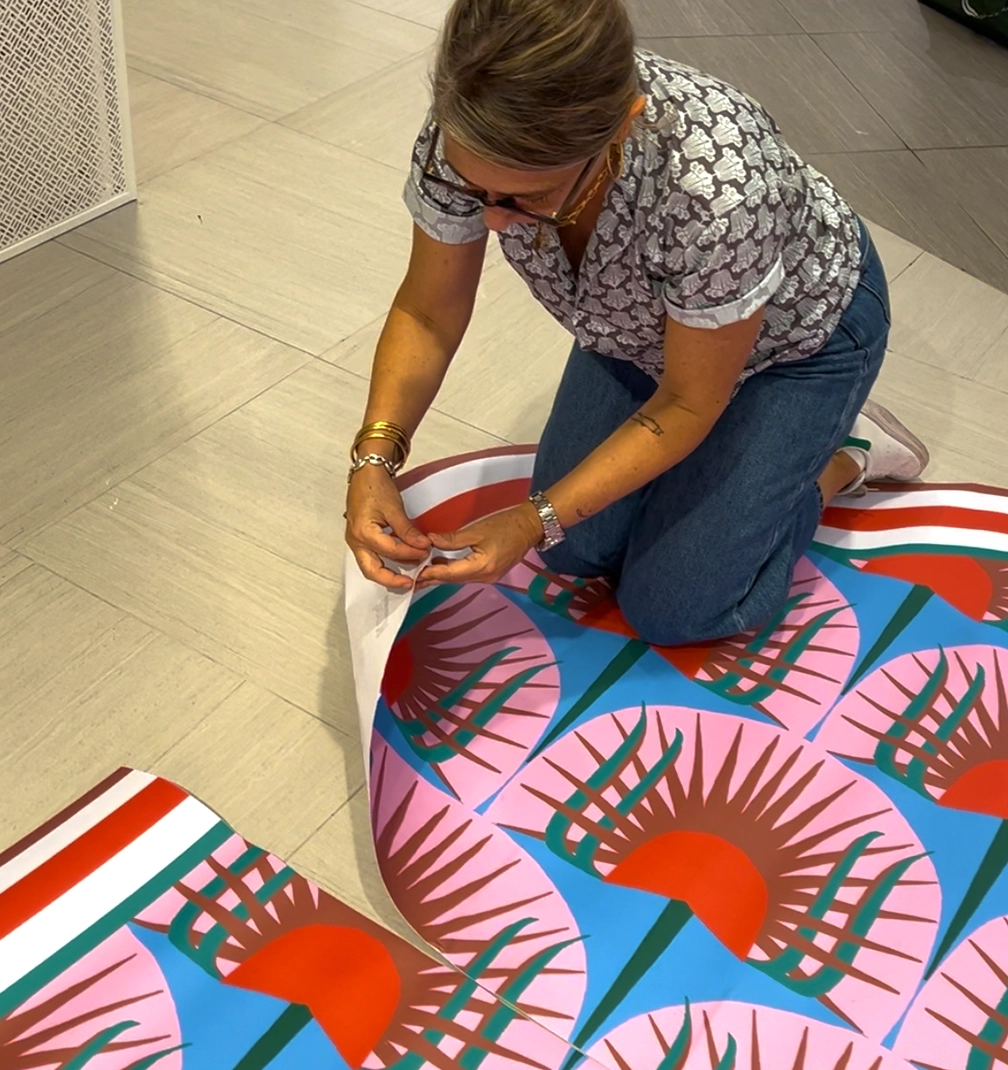
For this collection, we worked with a different approach to batik. Not the traditional copper block stamping most people associate with Malaysian batik, but a silk screen wax-resist technique, where wax is pushed through screens by hand before the fabric is dyed. It sits somewhere between traditional batik and silkscreen printing, but still belongs very much to the batik family because the principle remains the same: wax resisting dye.

LISETTE

SHARE

Traditional batik is usually divided into a few methods. Batik tulis is drawn by hand using a canting tool. Batik cap uses copper stamps dipped in wax. Ours is closer to what is sometimes referred to as screen printed wax batik, a more contemporary evolution of the craft that allows larger surfaces and bolder compositions while still keeping the unpredictability that makes batik beautiful.

And that unpredictability is exactly why I love it.

The wax never behaves perfectly. The dye shifts slightly from batch to batch. Colours deepen, soften, or move depending on temperature, timing, and the hand of the maker. Some prints come out sharper, others more blurred around the edges. There are overlaps, irregularities, tiny imperfections that machines would immediately correct. But that is where the soul is.

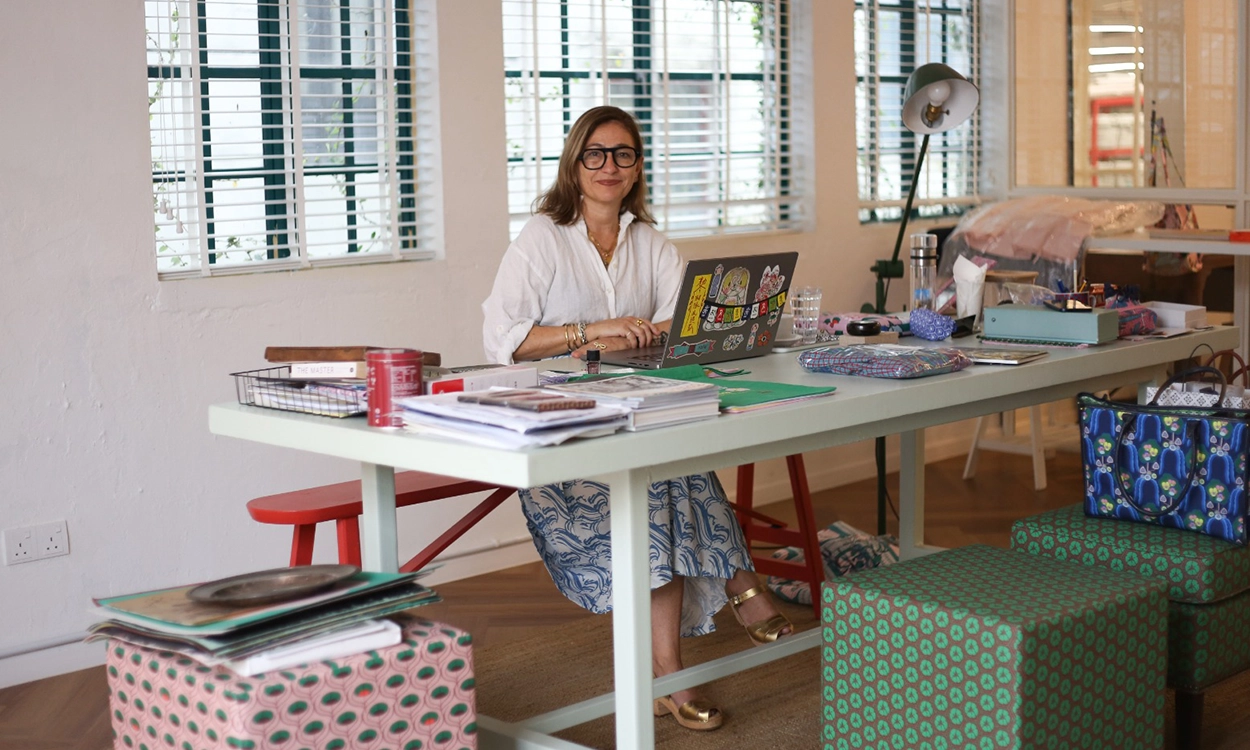
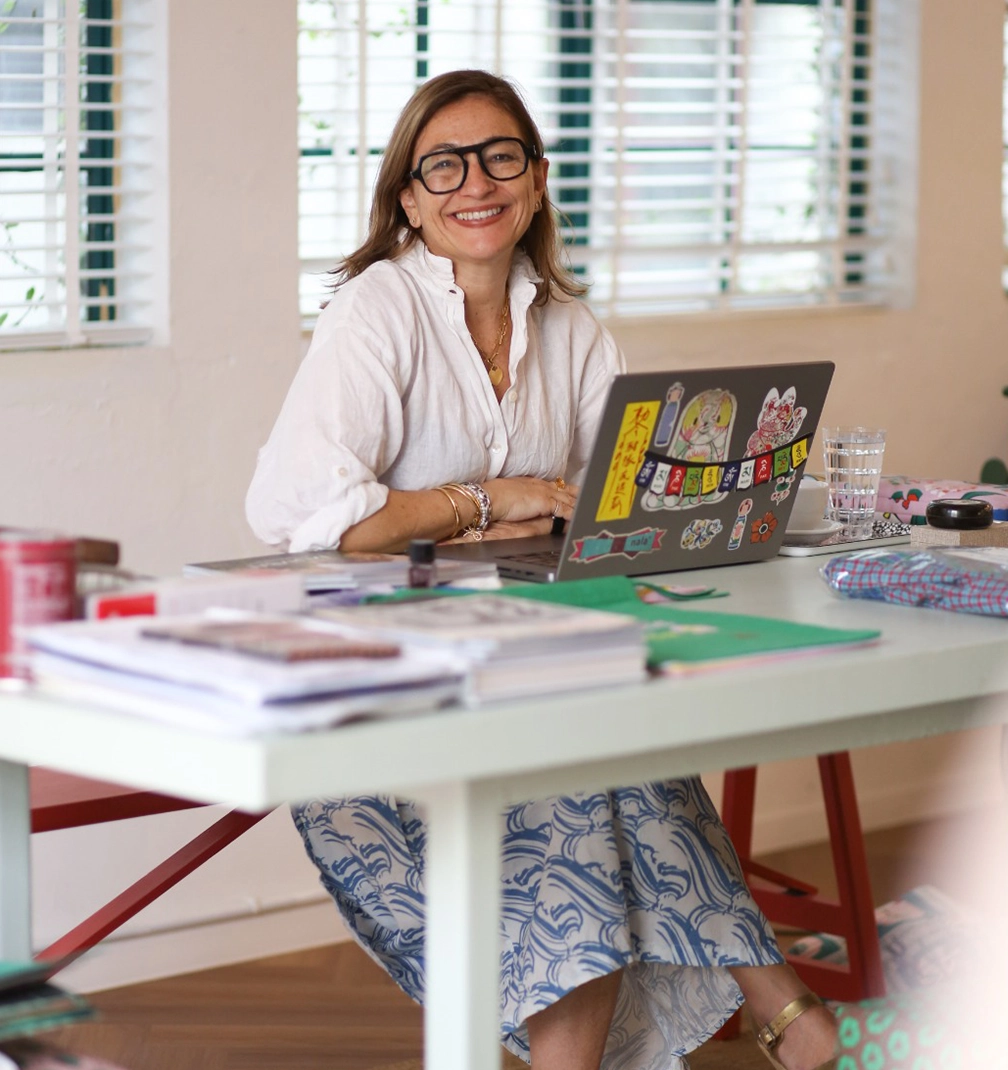
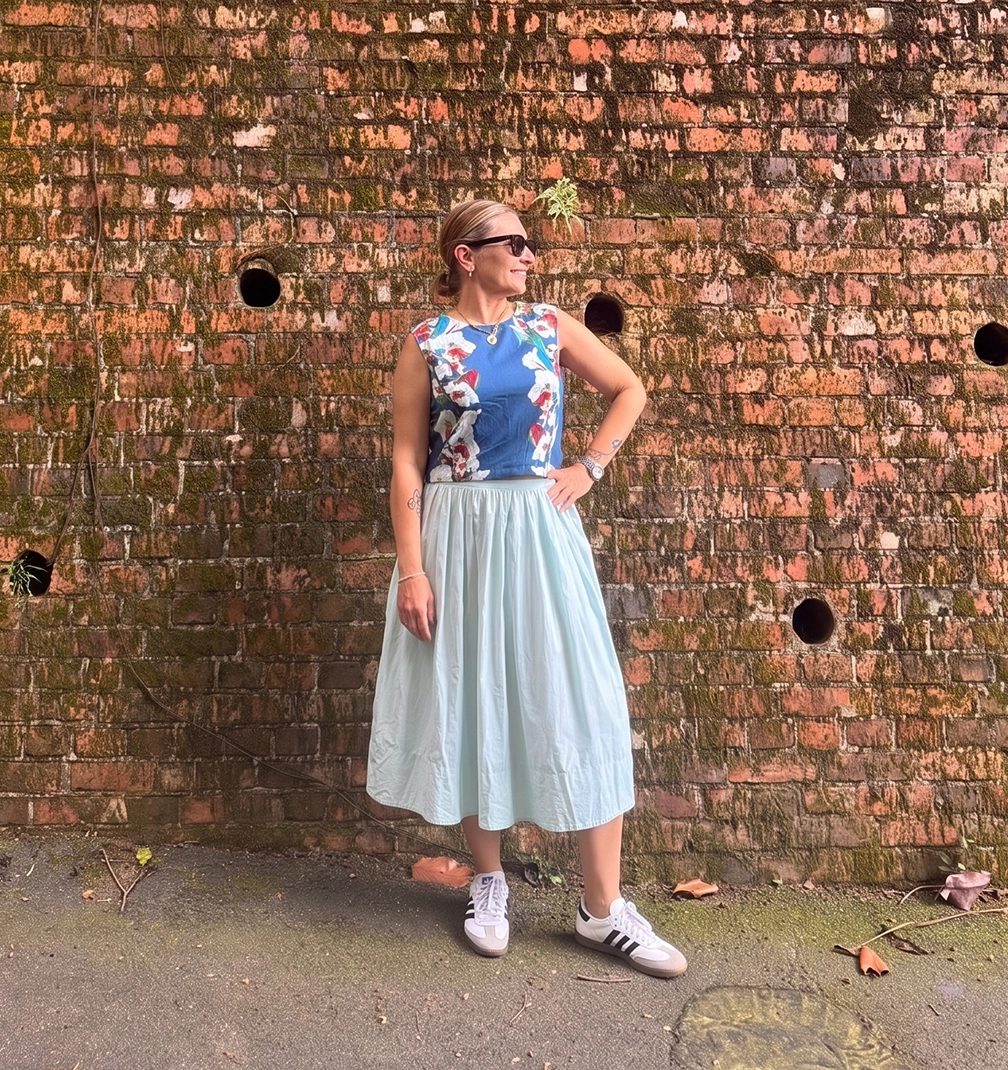
The skirt that thinks it is a painting.

The more I worked on this Brutal Times collection, the more I realised how closely this process reflects brutalism itself. Brutalism was never really about concrete. It was about honesty. Letting materials speak for themselves. Showing texture, process, and construction instead of hiding them behind polish.

This batik does the same thing. You can see the hand in it.
You can feel the process in it. Nothing is overly corrected.

And in a world where everything is becoming increasingly digital, smooth, and identical, there is something deeply human about that. Every piece in this collection was designed in Malaysia, printed in Malaysia, dyed in Malaysia, and manufactured in Malaysia. That makes me incredibly proud. Not just because it supports local craftsmanship, but because it proves that Malaysian making still carries depth, character, and beauty when it is given the space to breathe.

No two pieces will ever be exactly alike, and we do not want them to be. Variations in colour and alignment are part of the process, not defects. They are evidence that somebody touched it, printed it, dyed it, and brought it to life by hand. That is the beauty of batik. And for us, that is the beauty of these brutal times.

The skirt that thinks it is a painting.
Daiso’s Secret Weapon

Daiso’s Secret Weapon

5 min read

Daiso’s Secret Weapon

Singapore has a secret weapon, and strangely enough, it’s hidden inside Daiso Singapore.

LISETTE

SHARE

Not the chaotic, plastic-heavy version most of us grew up with. Not the place where you buy emergency hangers and forgettable storage boxes. Next to our store at Great World sits something called Standard Products, and honestly, it’s one of the most inspiring retail concepts I’ve seen in a very long time.

Imagine if MUJI loosened up a little, discovered color, and started designing everyday objects with actual soul.
That’s Standard Products.

The magic is not in expensive materials or luxury branding. The magic is in restraint. A tissue box suddenly feels gift-worthy. A soap dispenser becomes something you actually want to leave on your sink. Even the candles, scissors, notebooks, kitchen cloths, and storage baskets feel considered. Nothing screams for attention, yet everything quietly works together.

And the packaging. My god, the packaging. The colors are spot on. Soft earthy tones, muted greens, warm creams, dusty blues. The kind of palette that makes you realize how visuall

The skirt that thinks it is a painting.

What I love most is that they prove something very important:

Good design should not only belong to expensive brands.
There is something deeply democratic about making beautiful objects accessible. It reminds you that design is not about price. It’s about care. About editing. About understanding proportion, color, texture, and human behavior.

They also have incredibly beautiful knives, which are surprisingly difficult to find these days. Years ago, I used to hunt for good kitchen knives at Isetan Kuala Lumpur, but now you can walk into Standard Products and suddenly find objects that feel almost Japanese boutique level, without the intimidating price tag.

It’s also the perfect place for gifts. The kind of gifts that feel thoughtful because they are useful. A beautifully packed soap. A set of kitchen tools. Elegant stationery. Tiny objects that make daily life feel just a little more beautiful.

It understands something many brands forget: people are tired of clutter, but they are still hungry for beauty.

The skirt that thinks it is a painting.
Sundays, Before the Scroll

Sundays, Before the Scroll

5 min read

Sundays, Before the Scroll

I picked up an issue of Elle Decor UK the other day, and it brought me straight back.

LISETTE

SHARE

There was a time when this was how I spent my Sundays. A newspaper, a few magazines, and a quiet table somewhere in Paris, Brussels, or Amsterdam. No rush. Just time to look, to think, to absorb.

Elle Decor UK was always part of that ritual. So was Vogue Australia. They were not just something you flipped through. They were where you went to understand what was happening in design, in style, in the way people were living.

And you did not consume them quickly. You sat with them. You went back to pages. You noticed things you had missed. You could open the same magazine a week later, or even months later, and still find something new. A colour, a composition, a detail that suddenly made sense in a different way.

That kind of looking matters.

The skirt that thinks it is a painting.

In my world, I have always said, look for pink elephants. Train your eye to see what is not obvious, and ideas will follow. A pattern, a campaign, a direction. That does not come from speed. It comes from attention.

Magazines help with that. They activate a different part of the brain. The slower, more curious side. The side that connects things that are not immediately related.

Instagram, I am not so sure what it activates.

It is fast, efficient, and everywhere. But it rarely asks you to stay. It does not invite you to look twice. And without that second look, something is lost.

Books are finding their way back, which is good. But magazines should not disappear either. They sit somewhere in between. Accessible, visual, but still grounded in time and intention.

The skirt that thinks it is a painting.
What Stopped Me Was a Man on a Toilet

What Stopped Me Was a Man on a Toilet

5 min read

What Stopped Me Was a Man on a Toilet

Not something you expect to say in the middle of REX, but there it was.

LISETTE

SHARE

Unapologetic in burgundy, with his private parts neatly covered by a flower. And somewhere in that same world, a book titled How to Be Rich, which he’s reading… while sitting there.
 
You have to respect that level of confidence.
 
Summation doesn’t try too hard. It just gets it right. The humour is slightly inappropriate, slightly uncomfortable, and exactly where it needs to be. You laugh first, and then you realise how well everything is actually put together.
 
The colours are great. The compositions are clean. Nothing feels off. And that’s rare, because work like this often leans too far into chaos. This doesn’t. It’s controlled, considered, and very deliberate.
 
The text underneath the man on the toilet : To a Better Year. I love the dry humour.
The skirt that thinks it is a painting.
What I like even more, once you look past the first laugh, is that this isn’t random. It’s part of something bigger. Summation sits alongside their sister brand Summorie, where they make notebooks, paper goods, and everyday objects with the same level of care. It’s not just humour for the sake of it. It’s design thinking, applied to everything, even the smallest piece.
 
Every book is hand-stitched. Clean, precise, no cutting corners. And somehow still affordable, which makes it even better, because usually this kind of detail comes with a heavy price tag.
 
The space reflects that mindset. Not just books on a shelf, but a mix of studio, indie publishing, and a bit of café energy. It’s not polished in the traditional sense, but it feels alive, and that’s the point.
 
They’re still at REXKL for now, but not for long.
 
So if this speaks to you, don’t wait. It’s not trying to please everyone. And that’s exactly why it does.
The skirt that thinks it is a painting.
Herbs Malaya, Now on Paper. Limited Prints.

Herbs Malaya, Now on Paper. Limited Prints.

5 min read

Herbs Malaya, Now on Paper. Limited Prints.

Translating my personal paintings into wearable art for the first time marks a proud creative milestone, successfully blending the soul of the original canvas with the precision of a silkscreened skirt.

LISETTE

SHARE

What started quietly has turned into something quite special.

The opening in Penang was a real moment. Full, warm, and alive in the way you hope an exhibition will be. We were honoured to have Rebecca Owen with us, and endlessly grateful to Narelle McMurtry for opening her space and making this possible.

This exhibition is a return to something very simple. Looking closely. Really closely.
Herbs, often overlooked, suddenly become the centre of attention. Enlarged, reworked, and reassembled into something that feels both familiar and completely new.

From this body of work, we are releasing three limited edition fine art prints.

The skirt that thinks it is a painting.

The largest, Buah Keras (candle nut), holds two flowers and anchors the collection.
Then Jintan Manis, more delicate, more intricate.
And finally, Daun Kari (curry leaf). Very grounded. Very honest. And quietly strong. One of our favourites.

Each print is available in A2, A3, and A4.
Framed and unframed options are available.

All prints are produced on Hahnemühle German Etching paper with deckled edges. A paper with weight, texture, and presence. It holds the work in the way it should be held.

We are keeping this tight.
Only eight prints per design.

This is not something we will repeat.

All works are currently visible in Penang, with a delivery time of approximately two weeks.

Alongside the exhibition, we took the team up for what became our “art weekend.”
A pottery class, long meals, too much laughter, and just enough chaos. The kind of time that reminds you why you do any of this in the first place.

The exhibition runs until the end of May.

If you are in Penang, go and see it.
If not, reach out. We’ll take you through it.

To find out pricing and options, please contact us directly.

The skirt that thinks it is a painting.
The Weekend Coffee Takes Over

The Weekend Coffee Takes Over

5 min read

The Weekend Coffee Takes Over

Something happens when coffee people gather. There is a shared sense of intention you can feel immediately, in the way things are presented, in the way people dress, and in the quiet confidence of brands that know exactly what they are doing.

LISETTE

SHARE

You start to notice the details. The packaging is considered, often stripped back, often black, but never boring. It feels deliberate. It feels sharp. It reflects a community that genuinely cares about taste, not just in coffee, but in everything around it.

This is the second edition of the Coffee Festival at The Campus, and it has grown to twice its size. It is led by Thomas from Ghostbird, a long-time partner and the mind behind Ghostbird Coffee Company, one of Kuala Lumpur’s most respected specialty coffee roasters, known for making great coffee accessible while staying deeply rooted in craft and community. 

The skirt that thinks it is a painting.

What makes this collaboration work is simple. It comes from the same place. Passion first, ego second. Everything built with care, and importantly, built in Malaysia.

For the first time, Nala steps into this world in a different way. We are going all in on black for the weekend, a shift that mirrors the mood and the aesthetic of the festival itself.

We are also opening up our space. Visitors can get their coffee, ideally from Ghostbird, and then come and sit at Nala. It becomes part of the experience. A place to pause, to reset, to enjoy the festival from a different angle.

We have created 50 exclusive T-shirts for the weekend. Once they are gone, they are gone. They will only be available at Kasturi.

There will also be small gestures throughout the festival. With every coffee purchase from Ghostbird, a limited edition sticker will be given, while stocks last.

The festival runs from Friday to Sunday. It is best to come early. Parking will be limited, so taking a Grab is recommended.

It is one of those weekends where everything aligns. People, product, and purpose, all in the same place.

The skirt that thinks it is a painting.