
Nala Design New Collections Brutal TImes May 2026

SUBSCRIBE

LOGIN

NALA HAPPY TIMES

DESIGN

CULTURE

TASTE

TRAVEL

FOOD

THURSDAY SHOWS

UNAGI CLUB

NALA'S SHOP

DESIGN

CULTURE

TASTE

TRAVEL

FOOD

THURSDAY SHOWS

UNAGI CLUB

ARCHIVES

CONTRIBUTORS

DISCOVER

Nala's Instagram

Nala's Facebook

Nala's LinkedIn

Lisetts's LinkedIn

Nala's Tiktok

Nala's Youtube

OUR BRAND

About us

Nala's locations

FAQs

Customer service

Careers

Manifesto

HIGHLIGHT

Latest issue on 7 Sept 2025. Update every Saturday.

Thursday Show
Some stories stop you for a moment

Some stories stop you for a moment

5 min read

Some stories stop you for a moment

Adam’s was one of them.

LISETTE

SHARE

We were deeply inspired by his journey and the strength of his family. It reminded us that real impact often begins at home, with patience, resilience, and love.

At NALA, we don’t do ordinary. We don’t follow trends, we don’t design by demand, and we don’t create to fit in. We choose our own path, guided by instinct, emotion, and meaning.

Our stores are not ordinary spaces. They are places of colour, feeling, and openness. Our collections are not ordinary. Our patterns are not ordinary. And most importantly, the way we connect with people is not ordinary.

We believe in making people feel seen. We believe in creating beauty that goes beyond what you wear. We believe in spaces, products, and ideas that bring comfort, confidence, and a sense of belonging.

This is why this collaboration is so close to our hearts.

The skirt that thinks it is a painting.

Through this partnership, we proudly support Adam’s Autism Family, helping them continue their mission to raise awareness and support autism families across Malaysia. In honour of Autism Acceptance Month, we will also contribute to the National Autism Society of Malaysia, supporting programmes nationwide.

This is more than merchandise. It is a way to stand beside Adam, support his family, and strengthen the autism community together.

If you would like to be part of this, you can visit our stores or shop online to purchase exclusive AAF pieces, available only through NALA. Preorders will be available online first, followed by a limited in-store release.

The skirt that thinks it is a painting.
13 Is My Lucky Number

13 Is My Lucky Number

5 min read

13 Is My Lucky Number

I’ve always had a soft spot for the number 13. Most people avoid it. I choose it.
It’s my reminder to walk towards what feels uncomfortable, not away from it.

LISETTE

SHARE

I recently received Fail on Purpose: The 0% Chance Mindset by Uanthern Loh, and it immediately resonated. Not because it taught me something completely new, but because it put words to something I’ve always believed. I’ve never been afraid to fail. My question has always been simple: what is the worst thing that can happen?

And the truth is, the worst thing is that you fail. But that’s not really the worst thing. You learn, you get back up, and you move on. Nobody dies, nobody gets hurt. It’s all far less dramatic than we make it out to be.

The skirt that thinks it is a painting.

What the book does beautifully is reframe failure as something you can practice. Not avoid, not fear, but actively step into. Because the more you experience it, the less power it has over you.

In business and in life, that changes everything. When failure stops feeling like a verdict, you become freer to try, to build, and to begin. And sometimes, that’s all it takes.

In de Bloemetjes Zetten

In de Bloemetjes Zetten

5 min read

In de Bloemetjes Zetten

This Friday and Saturday, we’re doing something simple at TANGS on Orchard Road.

LISETTE

SHARE

I will be there personally, handing out bouquets of flowers to our customers. No reason, no minimum spend, just because.

In Dutch, we have a saying, “in de bloemetjes zetten.” It means to put someone in the flowers. To celebrate them. To show appreciation in a small, beautiful way. And that’s exactly what we want to do.

The skirt that thinks it is a painting.

Singapore has welcomed us so warmly. We’re incredibly grateful to be at TANGS, and even more grateful for the customers who have supported us from the very beginning. This feels like the right moment to give something back.

Flowers have always been at the heart of what we do. They’re where our inspiration begins. So this weekend, they’re yours.

Friday and Saturday, only at TANGS on Orchard Road.

An Invitation to Paint Again

An Invitation to Paint Again

5 min read

An Invitation to Paint Again

There are moments where you realise you need to return to something you almost left behind.
For me, that is painting.

LISETTE

SHARE

On Monday, the 13th of April at 4 p.m., I will be opening a small exhibition at ChinaHouse. This is an open invitation, and I would really love for you to come by.

This exhibition is a starting point. A first step towards a larger exhibition that will take place later this year on the 15th of November.

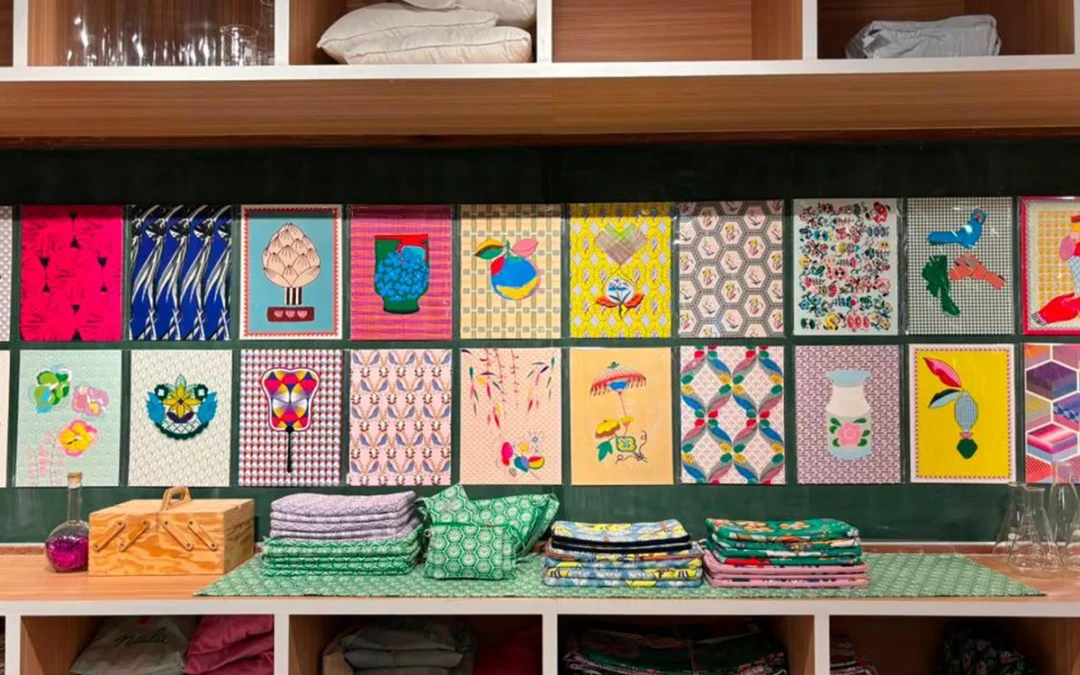
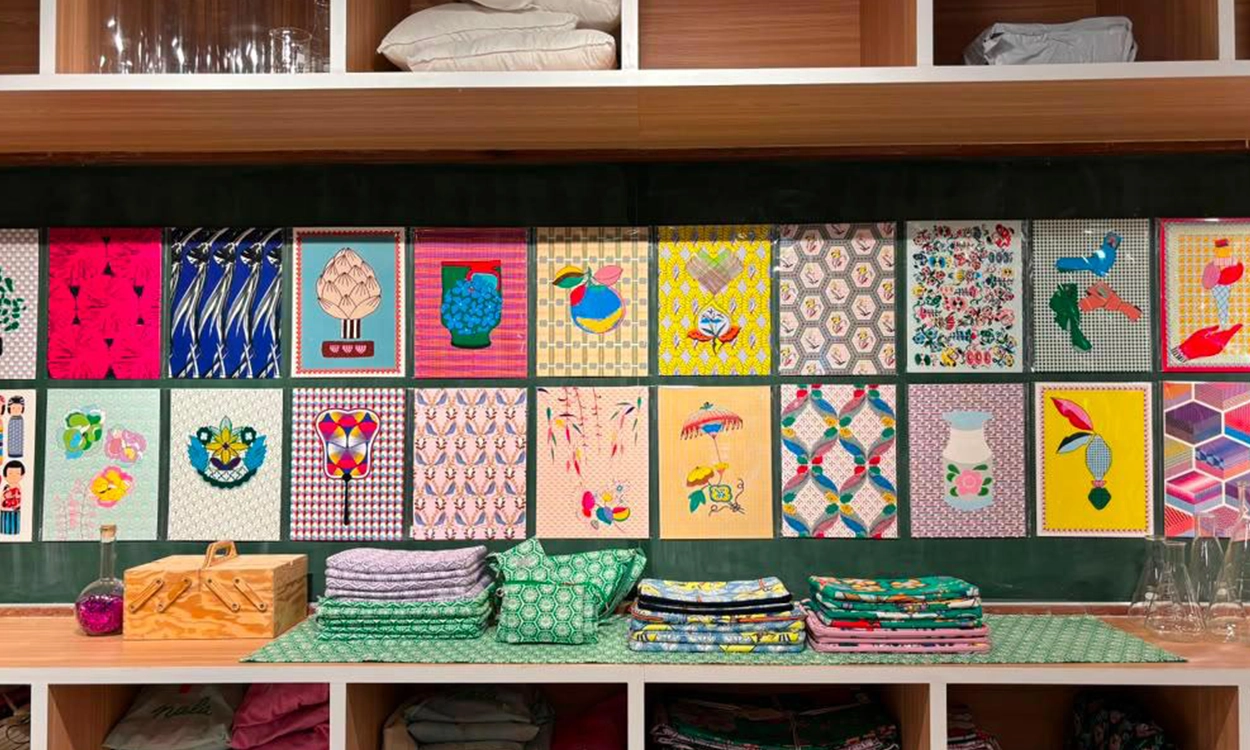
The works are centred around Malaysian herbs and their flowers. Things we see and use every day, but rarely stop to look at. Coriander, for example, has an incredibly delicate flower. Nutmeg as well. Once you isolate them, enlarge them, and really look, they become something else entirely.

It’s a reminder that beauty is often hidden in what we consider ordinary.

The skirt that thinks it is a painting.

This is not a Nala exhibition.
This is personal.

It’s about returning to the act of painting itself. With everything that comes with running a business, I realised I had stopped making time for it. And this is my way of changing that.

This exhibition only happened because of two people who gently pushed me.

Narelle McMurtry invited me to host this first showing, and Kee E-Lene invited me to create a larger exhibition later in the year, on the 15th of November. I said yes to both, which means I will be painting a lot this year.

The works themselves were created across three places. I started in Singapore, continued in Kuala Lumpur, and finished in Penang. Each location left its own mark, which I quite like.

And because I’m drawn to fabric and movement, the paintings are done on unstretched canvas. They hang more like textiles, with our patterns sitting behind them, creating a layered backdrop.

For this opening, we will have archival prints, postcards, and selected works available.

It’s simple. No big production. Just a moment to share the work.

Monday, 13th April
4 p.m.
ChinaHouse, Penang

Everyone is invited.
I hope to see you there.

The skirt that thinks it is a painting.
A Living Archive of Craft

A Living Archive of Craft

5 min read

A Living Archive of Craft

A Journal of North Borneo’s Traditional Baskets – Jennifer P. L. Ingham

LISETTE

SHARE

There are books that simply document objects, and then there are books that quietly preserve a culture. A Journal of North Borneo’s Traditional Baskets by Jennifer P. L. Ingham belongs firmly in the second category.
 
This remarkable publication reads almost like a field notebook of a disappearing world. Page after page presents detailed illustrations of baskets from across North Borneo, carefully documenting their shapes, weaving structures, materials, and names. What might appear at first glance as simple household objects reveals itself to be an incredibly sophisticated design language developed over generations.
 
One of the most fascinating aspects of the book is its attention to the different weaving techniques. Each basket carries its own structure, pattern, and rhythm. Some weaves are tight and geometric, built for durability and carrying heavy loads. Others are more open and decorative, revealing a lighter, more flexible construction. The patterns are not random. They often reflect function, identity, or regional tradition.
The skirt that thinks it is a painting.
Equally surprising is the diversity of materials. Many people assume that baskets in this region are made primarily from rattan. In reality, the archive shows a far wider botanical palette. Some baskets are woven from bamboo, valued for its strength and resilience. Others are crafted from rattan, prized for flexibility. And perhaps most unexpected are baskets made from forest ferns, a material few people would ever imagine could be transformed into something durable and beautiful.
 
The journal goes far beyond simply cataloguing the baskets themselves. It records the straps used for carrying them, the types of rims and bases, the variations in structure, and the subtle differences between communities. Every detail is carefully observed and drawn. The result is almost a taxonomy of basketry: an entire system of knowledge captured through careful documentation.
 
What makes the book so powerful is that it treats basketry with the same seriousness that museums often reserve for painting or sculpture. These baskets are not presented as anonymous craft objects. They are understood as part of a larger cultural ecosystem that includes the forest, the people who harvest the materials, the techniques passed down through generations, and the daily lives in which these objects are used.
 
In a time when many traditional crafts risk disappearing, this journal feels particularly important. It preserves not only the visual beauty of the baskets, but also the knowledge behind them: how they are constructed, what materials are used, and how each form relates to its purpose.
 
For anyone interested in design, anthropology, or the deep intelligence of traditional craft, A Journal of North Borneo’s Traditional Baskets is more than a book. It is an archive of ingenuity. It reminds us that long before modern design theory existed, communities were already creating objects of extraordinary elegance, precision, and purpose.
 
And perhaps most importantly, it reminds us that beauty often begins with the most humble materials: bamboo, rattan, or even a forest fern, woven carefully by hand into something that can carry both goods and stories across generations
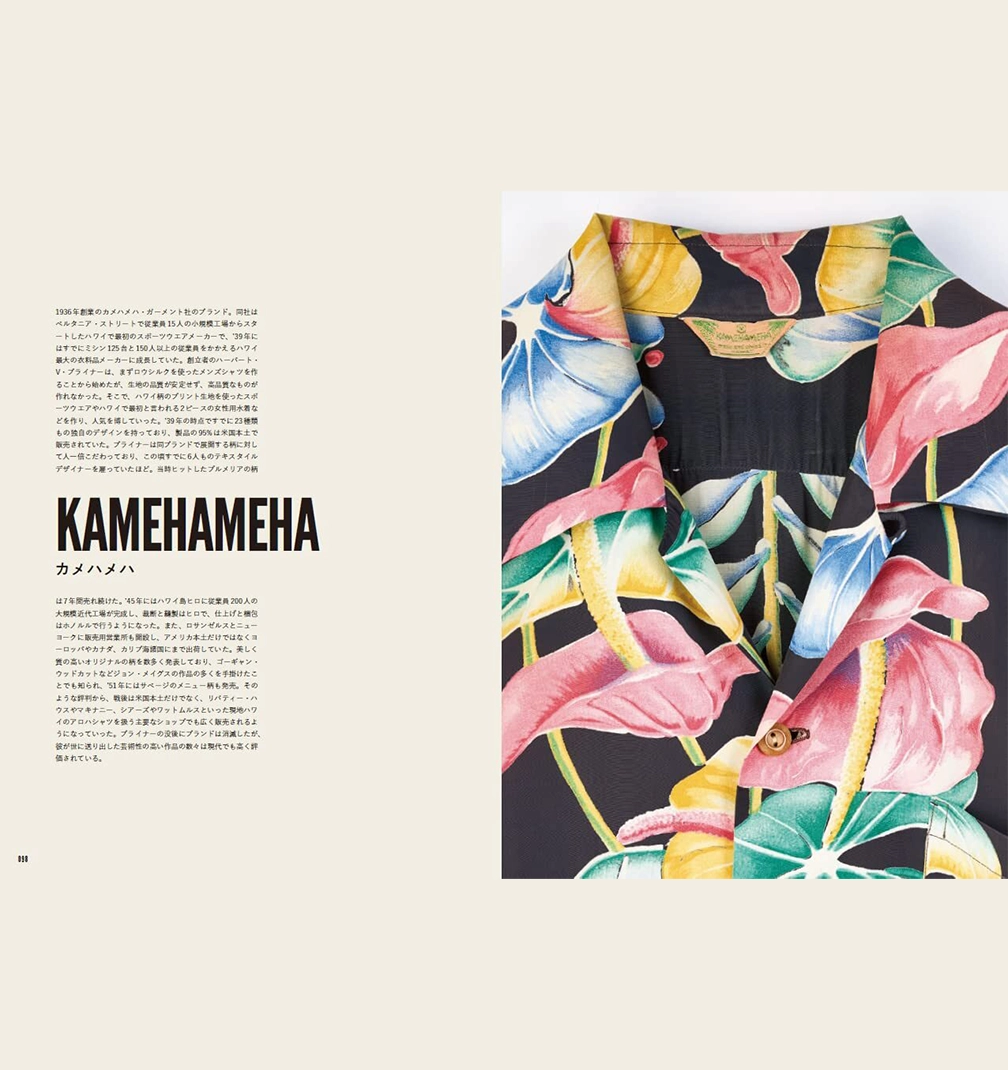
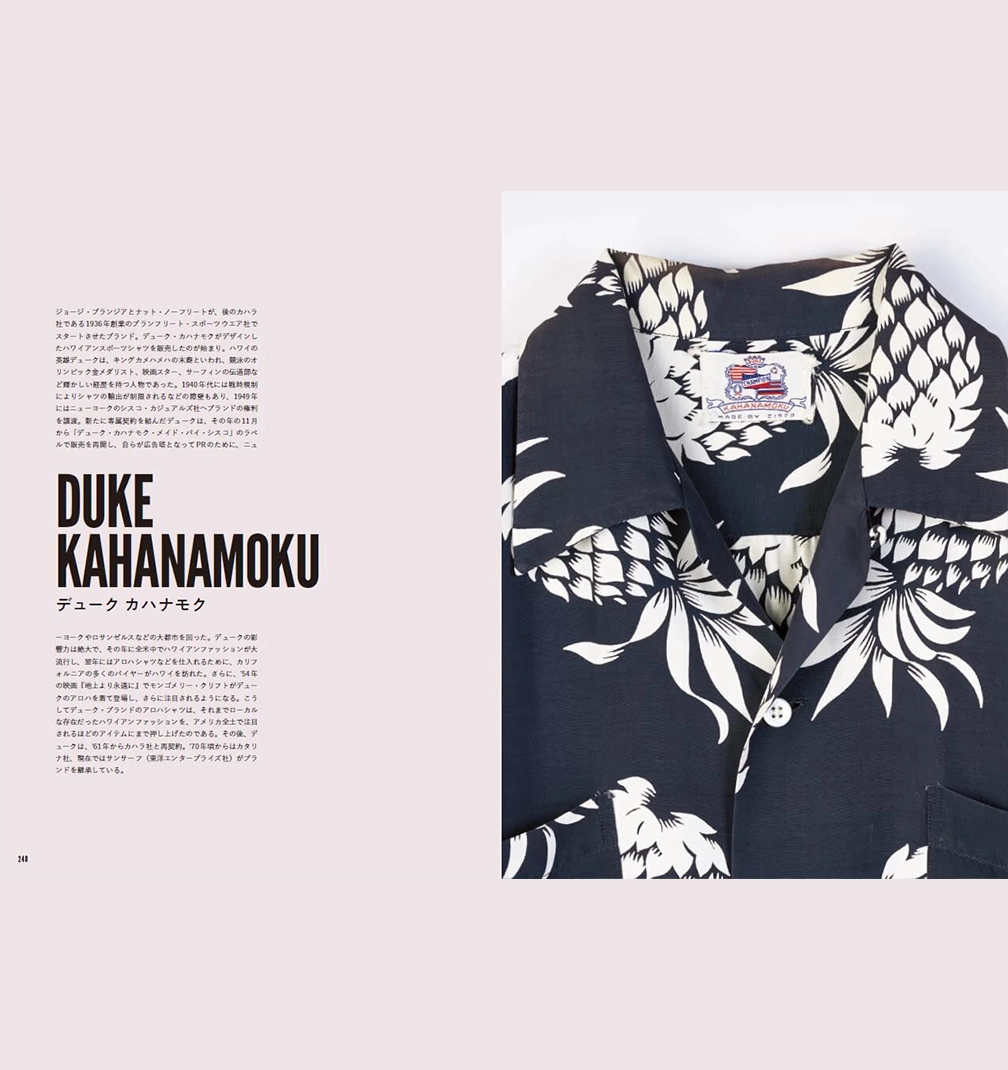
Kimono. The Standard I Measure Myself Against.

Kimono. The Standard I Measure Myself Against.

5 min read

Kimono. The Standard I Measure Myself Against.

There are books that inspire you, and then there are books that quietly raise the bar so high that you have no choice but to grow.

LISETTE

SHARE

For me, Kimono: The Art and Evolution of Japanese Fashion is that book.

Published by Thames & Hudson and edited by Anna Jackson, it draws largely from the extraordinary holdings of the Khalili Collections. These collections were assembled by Sir David Khalili, a British Iranian scholar and collector who dedicated decades to preserving some of the world’s most important art. His Japanese art collection is considered one of the most comprehensive in private hands, and what moves me is the seriousness behind it. This was not decorative collecting. It was systematic, academic, and deeply intentional, a lifetime devoted to safeguarding beauty.

That depth is felt in every page of this book.

The skirt that thinks it is a painting.

Each kimono is not simply a garment but an engineered composition. It is mathematics, poetry, architecture and discipline translated into silk. The placement of motifs is so intelligent that it almost feels unfair. Entire landscapes unfold only when the sleeve falls in a certain way, and blossoms travel across seams with such confidence that the garment becomes a moving canvas. The negative space breathes as deliberately as the most intricate embroidery.

As someone who is completely obsessed with patterns, I turn these pages and experience that very honest designer moment of thinking that I wish I had drawn this myself. What strikes me again and again is the restraint. The ability to know when to stop. The courage to leave space untouched. Every composition feels inevitable rather than applied, as if it could never have been arranged differently.

At the same time, I feel a genuine sadness when I see antique kimonos cut apart and turned into smaller objects. I understand the argument for reuse and sustainability, but to me a kimono is a complete artwork. It was conceived as a whole, with the silhouette, the drape and the narrative across the body all working together. To separate it feels like cutting a painting into fragments. These pieces carry history in their seams, and they deserve to remain intact.

This book reinforces my belief that true design has dignity and that tradition can evolve without losing its integrity. Whenever I doubt myself as a designer, I open it again, and in doing so I am reminded why I care so deeply about placement, proportion and storytelling through print. It both humbles and energises me, because it shows me what is possible while gently insisting that I aim higher.

More than anything, it makes me dream of Japan, not as a place to visit casually but as a place to study seriously. I imagine dye vats, textile ateliers and artisans who understand colour the way musicians understand sound. I want to learn how they balance boldness with restraint and how they allow a motif to breathe within such a strict structure.

This is not simply one of the most beautiful books I own. It is the standard I measure myself against.

The skirt that thinks it is a painting.