
Nala Design New Collections Brutal TImes May 2026

SUBSCRIBE TO OUR NEWSLETTER

SHOP NOW

NALA HAPPY TIMES

DESIGN

CULTURE

TASTE

TRAVEL

FOOD

THURSDAY SHOWS

UNAGI CLUB

NALA'S SHOP

DESIGN

CULTURE

TASTE

TRAVEL

FOOD

THURSDAY SHOWS

UNAGI CLUB

ARCHIVES

CONTRIBUTORS

DISCOVER

Nala's Instagram

Nala's Facebook

Nala's LinkedIn

Lisetts's LinkedIn

Nala's Tiktok

Nala's Youtube

OUR BRAND

About us

Nala's locations

FAQs

Customer service

Careers

Manifesto

HIGHLIGHT

Latest issue on 7 Sept 2025. Update every Saturday.

Thursday Show
Where It All Began

Where It All Began

5 min read

Where It All Began

There are moments in life that only make sense when you look back.
For Nala, this was one of them.

LISETTE

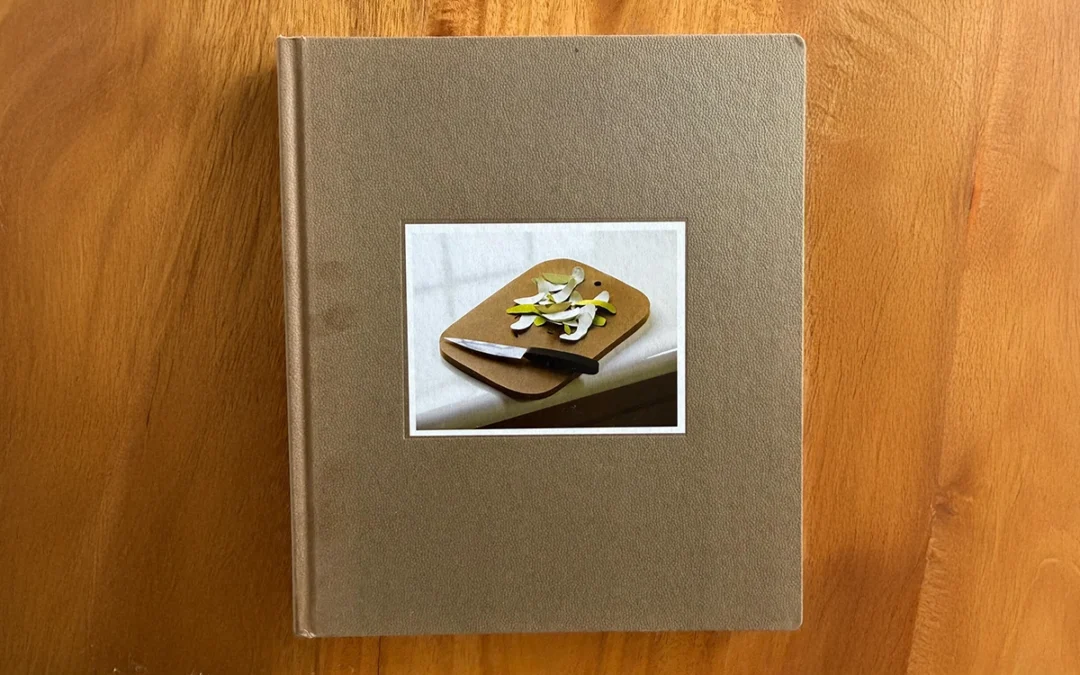
Straits Chinese Porcelain is not just a book we carry. It is, in many ways, where everything began.

Before there were scarves, stores, or collections, there was a set of angpow. Our very first product. And those designs were directly inspired by the porcelain captured in this book. The colours, the compositions, the florals, the balance between precision and joy. It all started here.

What makes this book so special is not only the beauty of the pieces, but the person behind it.

Datin Sri Kee Ming-Yuet has dedicated her life to preserving and documenting Straits Chinese porcelain. Her work is thoughtful, detailed, and deeply rooted in heritage. Through her, these objects are not just collected, they are understood.

And for me, it goes beyond inspiration.

The skirt that thinks it is a painting.

Her family has been part of my journey from the very beginning. Always present, always supportive, always there. The kind of presence you don’t question, you just feel. Over time, you realise that some people are simply meant to be part of your path.

Looking back, it feels very clear. The universe has a way of connecting the right people at the right time, often long before you understand why.

This book holds that beginning.

It is a beautiful documentation of Straits Chinese porcelain, but it is also a reminder of how ideas are formed, how inspiration travels, and how something small can grow into something much bigger.

From a set of angpow to everything Nala is today, this is where the story started.

The book is now available in all our stores across Malaysia.

The skirt that thinks it is a painting.
An Invitation to Paint Again

An Invitation to Paint Again

5 min read

An Invitation to Paint Again

There are moments where you realise you need to return to something you almost left behind.
For me, that is painting.

LISETTE

On Monday, the 13th of April at 4 p.m., I will be opening a small exhibition at ChinaHouse. This is an open invitation, and I would really love for you to come by.

This exhibition is a starting point. A first step towards a larger exhibition that will take place later this year on the 15th of November.

The works are centred around Malaysian herbs and their flowers. Things we see and use every day, but rarely stop to look at. Coriander, for example, has an incredibly delicate flower. Nutmeg as well. Once you isolate them, enlarge them, and really look, they become something else entirely.

It’s a reminder that beauty is often hidden in what we consider ordinary.

The skirt that thinks it is a painting.

This is not a Nala exhibition.
This is personal.

It’s about returning to the act of painting itself. With everything that comes with running a business, I realised I had stopped making time for it. And this is my way of changing that.

This exhibition only happened because of two people who gently pushed me.

Narelle McMurtry invited me to host this first showing, and Kee E-Lene invited me to create a larger exhibition later in the year, on the 15th of November. I said yes to both, which means I will be painting a lot this year.

The works themselves were created across three places. I started in Singapore, continued in Kuala Lumpur, and finished in Penang. Each location left its own mark, which I quite like.

And because I’m drawn to fabric and movement, the paintings are done on unstretched canvas. They hang more like textiles, with our patterns sitting behind them, creating a layered backdrop.

For this opening, we will have archival prints, postcards, and selected works available.

It’s simple. No big production. Just a moment to share the work.

Monday, 13th April
4 p.m.
ChinaHouse, Penang

Everyone is invited.
I hope to see you there.

The skirt that thinks it is a painting.
From Dosa to Bread and Butter

From Dosa to Bread and Butter

5 min read

From Dosa to Bread and Butter

What stayed with me wasn’t just the dish. It was the way everything came together.
One of my favourite restaurants in Malaysia is Au Jardin.

LISETTE

I met Kim Hock Su a long time ago, before the Michelin star, and we’ve shared a connection ever since. It started, quite unexpectedly, with a flower. Lantana.

Since then, I’ve watched his work evolve, and what he has created is exceptional.

He has this ability to take something deeply local and reinterpret it in a completely new way. His chutney turned into butter with dosa turned into bread, turned into what feels like a French bread and butter course, is a perfect example. Familiar, but completely reimagined.

But what struck me most were the colours, and how they sit within the dish.

The skirt that thinks it is a painting.

Not just beautiful, but precise. The yellow was perfect. The greens were exact. Nothing felt accidental. Working in design, you become very sensitive to colour, and when it’s done well, you recognise it immediately. Here, everything was in balance.

The visual composition supports it, of course. Every element is intentional. The flower speaks to the sauce, the sauce to the plate, the plate to the ingredient. It’s all connected, but never overworked.

And then there are the moments in between.

The small, unexpected gestures that stay with you just as much as the main dishes. The mini Magnum ice cream, served as a palate cleanser, simple, nostalgic, and perfectly placed.

And at the end, a beautiful detail. A small shelf unit brought to the table, presenting Malaysian classics, reinterpreted as desserts. Familiar flavours, but elevated, thoughtful, and very personal.

There is also a sense of restraint, which I appreciate. You leave satisfied, but not overwhelmed. It’s curated from beginning to end.

We were there celebrating a 60th birthday, and it couldn’t have been a better setting. Quietly special, beautifully executed.

And then, one last detail. The vegetarian hot dog you take home. I had mine the next morning, and it was just as enjoyable.

It’s rare to find a place where everything feels so considered.

And even rarer to see someone bring together flavour, colour, and composition with that level of clarity.

The skirt that thinks it is a painting.
Raya Gaya – Pastel, Done Right

Raya Gaya – Pastel, Done Right

5 min read

Raya Gaya - Pastel, Done Right

There’s something about men and pastel that still feels slightly unexpected. Which is exactly why it works.

LISETTE

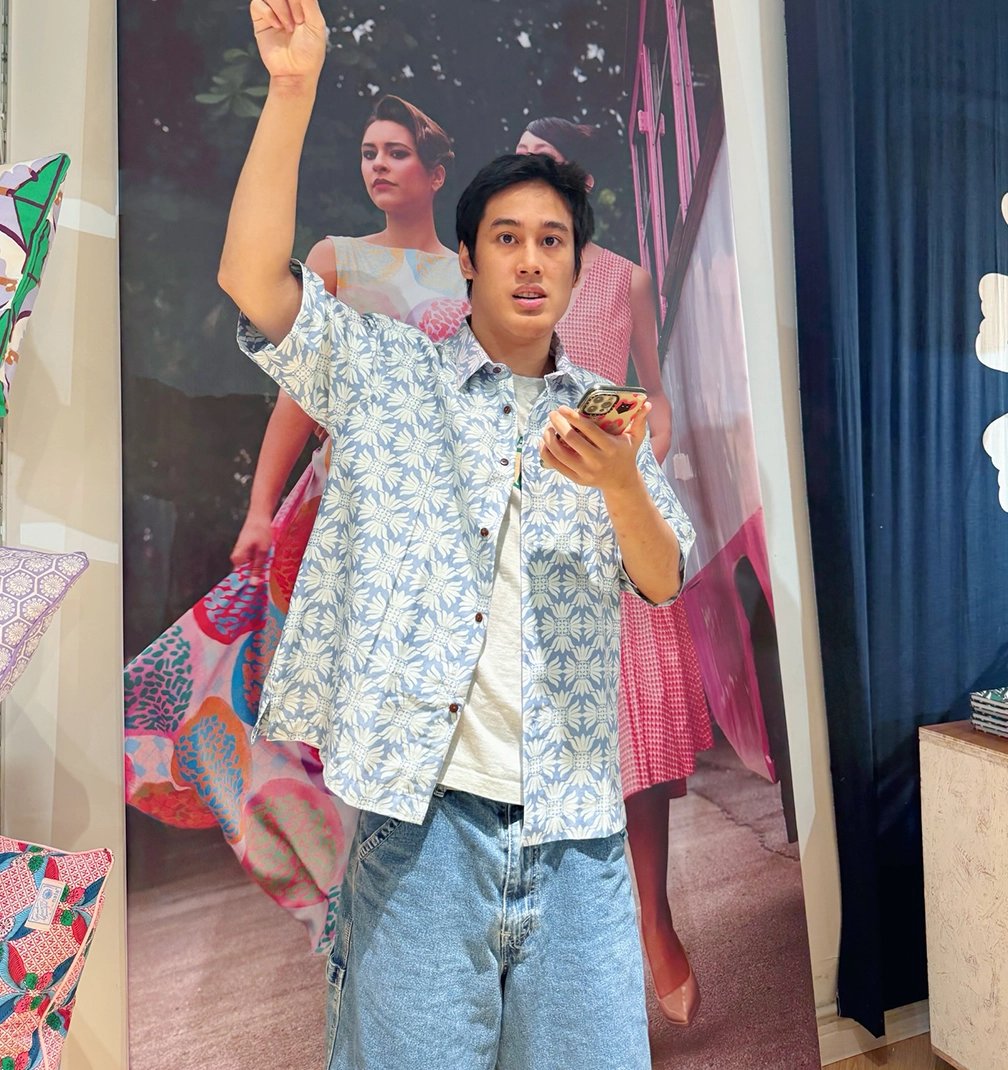
This Hari Raya, we’re introducing our men’s shirts in Malaysian batik. Easy to wear, light on the body, and designed to feel natural rather than styled.

The collection brings together a series of prints that sit somewhere between memory and observation.

Ixora, a flower you see everywhere in Malaysia, often unnoticed, but always present.
Passion fruit, slightly wild and a little unexpected.
Iris, more structured, almost graphic in the way it sits on the fabric.

And then a few that are closer to everyday life.

The skirt that thinks it is a painting.

The classic red plastic chair, reworked into a print and placed onto soft cotton voile, light and almost translucent. A small nod, a bit of humour, something very familiar turned into something new.

Sharp, taken from our archives, inspired by the idea of staying sharp in life. A reminder more than a motif.

And of course pelikat. Because stripes have always been, and will always be, relevant.

There are also pieces made from our earlier batik designs, taken out of the archive and given a new life as shirts. These are one-off pieces. They won’t be reproduced. They simply needed to be worn, not stored.

All shirts are made from 100% cotton, so they’re breathable and easy in our climate. They work open over a T-shirt, buttoned up, or paired with a sarong. There’s no strict way to wear them.

What ties everything together is the colour.

Pastel, but considered. Pink that feels confident. Yellow that sits comfortably. Nothing too soft, nothing too loud.

Hari Raya is a moment to reset, to step into something new, and to feel good doing it.

This is our version of that.

In our universe, flowers will always be in fashion.

Selamat Hari Raya to all our customers.
May your days ahead be soft where they need to be, strong where it matters, and filled with quiet moments of happiness. In a world that can feel a little too fast and a little too loud, may you find your own rhythm again, and may the year ahead unfold with beauty, ease, and grace.

The skirt that thinks it is a painting.
A Living Archive of Craft

A Living Archive of Craft

5 min read

A Living Archive of Craft

A Journal of North Borneo’s Traditional Baskets – Jennifer P. L. Ingham

LISETTE

There are books that simply document objects, and then there are books that quietly preserve a culture. A Journal of North Borneo’s Traditional Baskets by Jennifer P. L. Ingham belongs firmly in the second category.
 
This remarkable publication reads almost like a field notebook of a disappearing world. Page after page presents detailed illustrations of baskets from across North Borneo, carefully documenting their shapes, weaving structures, materials, and names. What might appear at first glance as simple household objects reveals itself to be an incredibly sophisticated design language developed over generations.
 
One of the most fascinating aspects of the book is its attention to the different weaving techniques. Each basket carries its own structure, pattern, and rhythm. Some weaves are tight and geometric, built for durability and carrying heavy loads. Others are more open and decorative, revealing a lighter, more flexible construction. The patterns are not random. They often reflect function, identity, or regional tradition.
The skirt that thinks it is a painting.
Equally surprising is the diversity of materials. Many people assume that baskets in this region are made primarily from rattan. In reality, the archive shows a far wider botanical palette. Some baskets are woven from bamboo, valued for its strength and resilience. Others are crafted from rattan, prized for flexibility. And perhaps most unexpected are baskets made from forest ferns, a material few people would ever imagine could be transformed into something durable and beautiful.
 
The journal goes far beyond simply cataloguing the baskets themselves. It records the straps used for carrying them, the types of rims and bases, the variations in structure, and the subtle differences between communities. Every detail is carefully observed and drawn. The result is almost a taxonomy of basketry: an entire system of knowledge captured through careful documentation.
 
What makes the book so powerful is that it treats basketry with the same seriousness that museums often reserve for painting or sculpture. These baskets are not presented as anonymous craft objects. They are understood as part of a larger cultural ecosystem that includes the forest, the people who harvest the materials, the techniques passed down through generations, and the daily lives in which these objects are used.
 
In a time when many traditional crafts risk disappearing, this journal feels particularly important. It preserves not only the visual beauty of the baskets, but also the knowledge behind them: how they are constructed, what materials are used, and how each form relates to its purpose.
 
For anyone interested in design, anthropology, or the deep intelligence of traditional craft, A Journal of North Borneo’s Traditional Baskets is more than a book. It is an archive of ingenuity. It reminds us that long before modern design theory existed, communities were already creating objects of extraordinary elegance, precision, and purpose.
 
And perhaps most importantly, it reminds us that beauty often begins with the most humble materials: bamboo, rattan, or even a forest fern, woven carefully by hand into something that can carry both goods and stories across generations