




Culture
17 March 2026
5 min read
A Living Archive of Craft
A Journal of North Borneo’s Traditional Baskets – Jennifer P. L. Ingham
LISETTE
SHARE

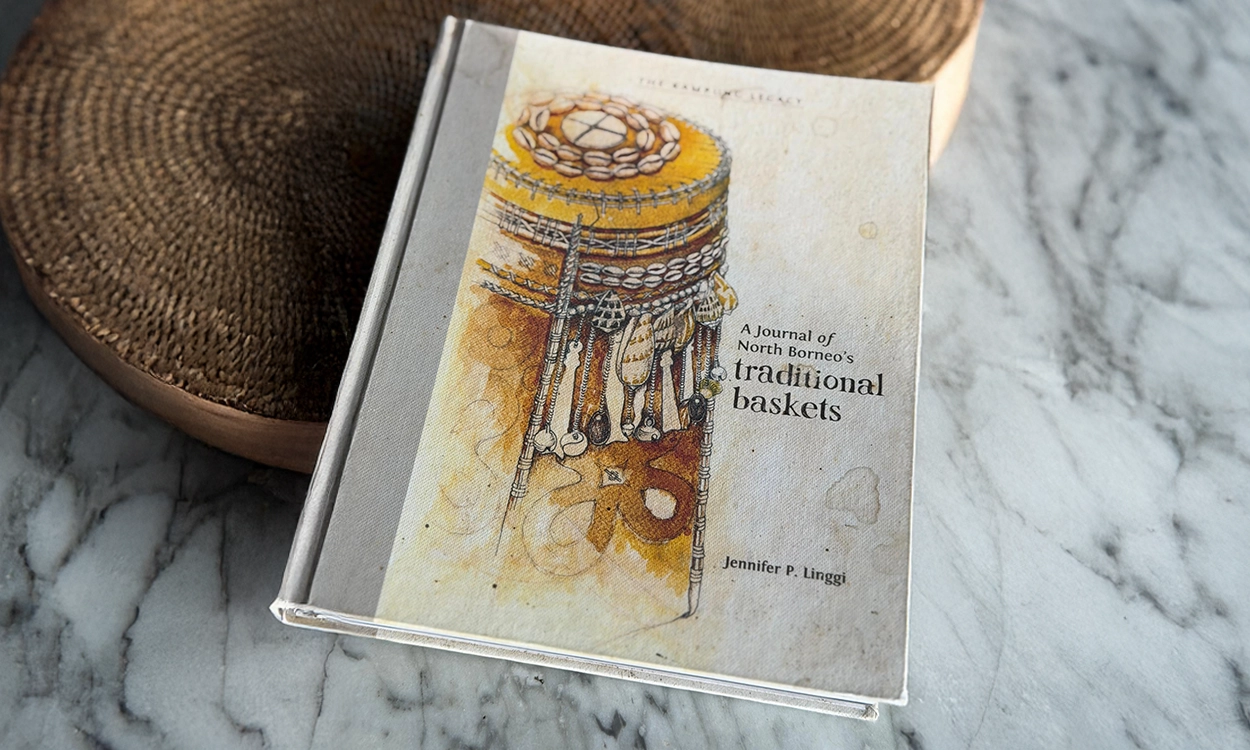
There are books that simply document objects, and then there are books that quietly preserve a culture. A Journal of North Borneo’s Traditional Baskets by Jennifer P. L. Ingham belongs firmly in the second category.
This remarkable publication reads almost like a field notebook of a disappearing world. Page after page presents detailed illustrations of baskets from across North Borneo, carefully documenting their shapes, weaving structures, materials, and names. What might appear at first glance as simple household objects reveals itself to be an incredibly sophisticated design language developed over generations.
One of the most fascinating aspects of the book is its attention to the different weaving techniques. Each basket carries its own structure, pattern, and rhythm. Some weaves are tight and geometric, built for durability and carrying heavy loads. Others are more open and decorative, revealing a lighter, more flexible construction. The patterns are not random. They often reflect function, identity, or regional tradition.
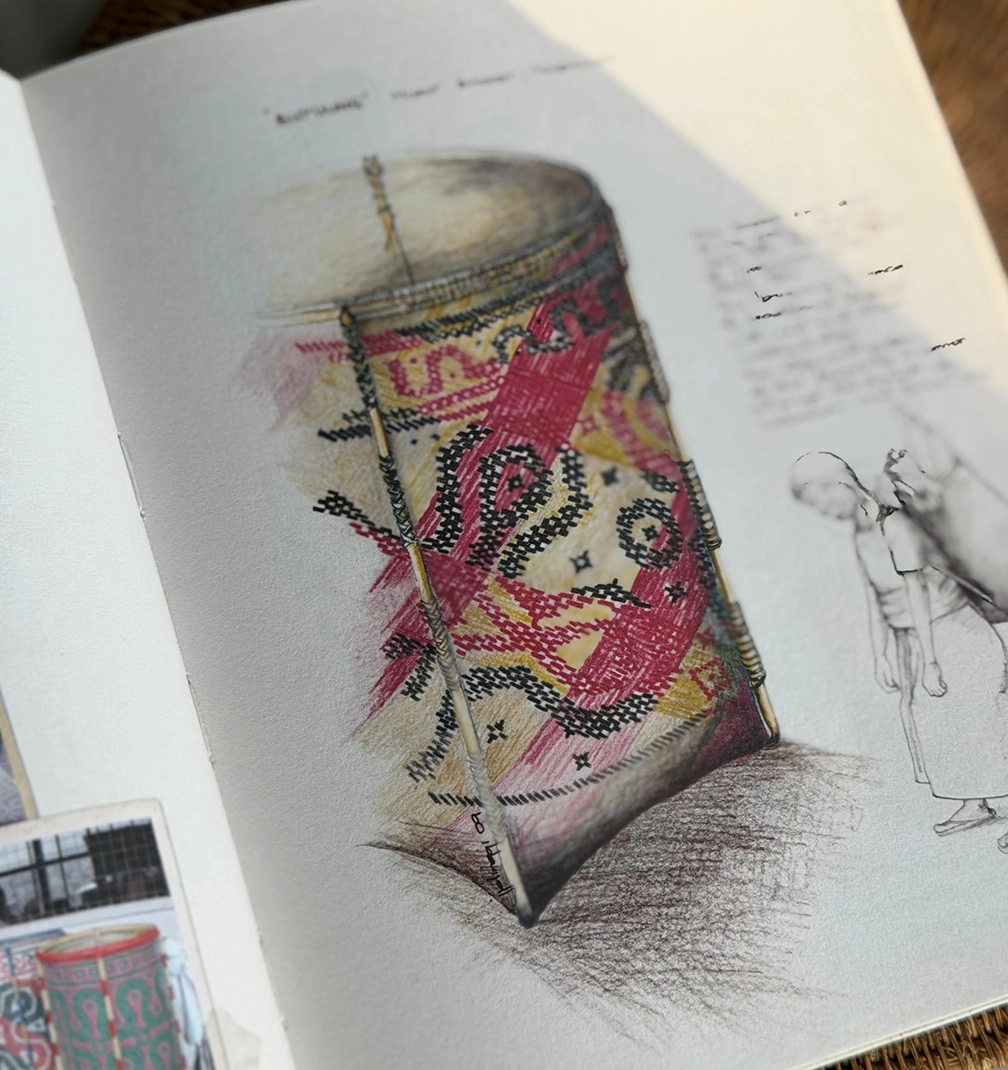
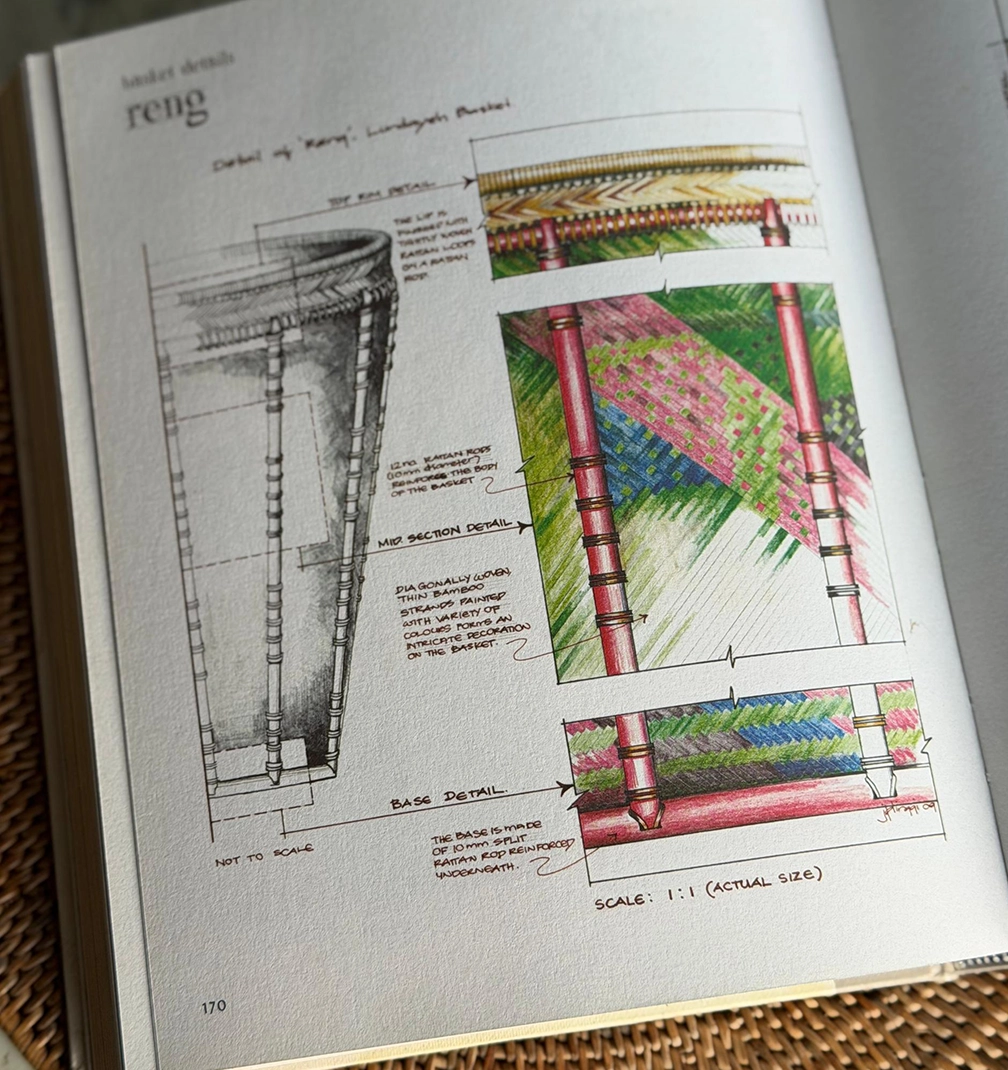
Equally surprising is the diversity of materials. Many people assume that baskets in this region are made primarily from rattan. In reality, the archive shows a far wider botanical palette. Some baskets are woven from bamboo, valued for its strength and resilience. Others are crafted from rattan, prized for flexibility. And perhaps most unexpected are baskets made from forest ferns, a material few people would ever imagine could be transformed into something durable and beautiful.
The journal goes far beyond simply cataloguing the baskets themselves. It records the straps used for carrying them, the types of rims and bases, the variations in structure, and the subtle differences between communities. Every detail is carefully observed and drawn. The result is almost a taxonomy of basketry: an entire system of knowledge captured through careful documentation.
What makes the book so powerful is that it treats basketry with the same seriousness that museums often reserve for painting or sculpture. These baskets are not presented as anonymous craft objects. They are understood as part of a larger cultural ecosystem that includes the forest, the people who harvest the materials, the techniques passed down through generations, and the daily lives in which these objects are used.
In a time when many traditional crafts risk disappearing, this journal feels particularly important. It preserves not only the visual beauty of the baskets, but also the knowledge behind them: how they are constructed, what materials are used, and how each form relates to its purpose.
For anyone interested in design, anthropology, or the deep intelligence of traditional craft, A Journal of North Borneo’s Traditional Baskets is more than a book. It is an archive of ingenuity. It reminds us that long before modern design theory existed, communities were already creating objects of extraordinary elegance, precision, and purpose.
And perhaps most importantly, it reminds us that beauty often begins with the most humble materials: bamboo, rattan, or even a forest fern, woven carefully by hand into something that can carry both goods and stories across generations